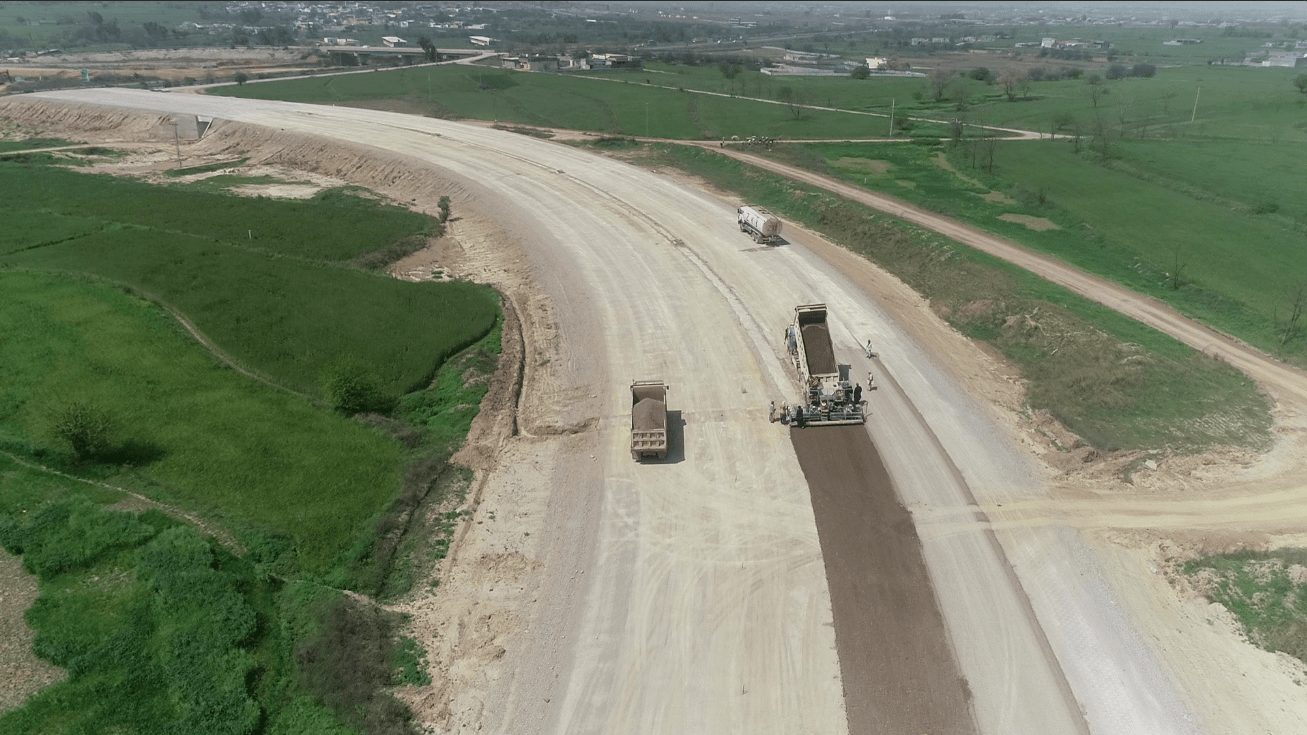
Mansehra to China
Pakistan is taking a major step toward reshaping its northern connectivity with China. The federal government has approved the construction of a brand-new highway — the N-15 — stretching from Mansehra all the way to the Chinese border. The project is being described as a faster, safer, and more modern alternative to the decades-old Karakoram Highway (KKH), which has long served as the main road link between the two countries.
The approval came during a meeting of the National Highway Authority (NHA), chaired by Federal Minister for Communications Abdul Aleem Khan, who said the new highway would be “unique in terms of trade, tourism, and defense.”
Read More: Islamic Development Bank approves $475 million for M-6 Sukkur-Hyderabad motorway
A New Route to Replace and Support the Karakoram Highway
The Karakoram Highway is an engineering marvel, but it is also one of the world’s most unpredictable routes, often blocked by landslides, harsh winters, and natural disasters. The new N-15 highway aims to provide a more reliable parallel route—one that is designed for modern traffic needs and better equipped to handle Pakistan’s growing trade with China.
The N-15 will pass through:
- Mansehra
- Naran
- Jalkhad
- Chilas
This alignment significantly cuts travel time and provides better year-round accessibility, especially during winter when snowfall often shuts down large portions of the KKH.
Built for the Future: A 4-Lane Modern Highway
Officials say the N-15 will largely follow a four-lane design, with a speed limit ranging from 60 to 80 km/h. This makes it much safer and more efficient for:
- Cargo trucks and cross-border trade
- Tourist vehicles
- Local transport
- Heavy winter traffic
The aim is to create a route that remains open and reliable throughout the year — something the Karakoram Highway has struggled with since its construction.
Tourism Corridors: Hotels, Resorts, Lakes, and Shopping Areas
The government isn’t just building a road; it’s planning an entire tourism and commercial corridor along the N-15. The project includes:
- Resorts and hotels
- Lakeside viewing and recreation spots
- Shopping areas
- Rest zones and parking facilities
These developments will be built under a public–private partnership (PPP) model, encouraging private investment and ensuring that the northern region becomes a much more attractive tourist hub.
Economic and Strategic Advantages
1. Boost to Trade and Transit
A modern parallel corridor toward China will help:
- Increase Pakistan’s regional trade potential
- Support future CPEC expansions
- Connect more easily with Central Asian markets
2. Strengthening Defense Logistics
The northern region is strategically vital. A second high-quality route will:
- Improve military mobility
- Ensure supply routes remain open even if the KKH faces disruptions
- Make national defense movements more reliable
3. Tourism Growth and Local Job Creation
With easier access and better facilities, tourism in areas like Naran, Kaghan, and Chilas is expected to surge. This means:
- More income for local businesses
- New investment in hospitality
- Jobs for mountain communities
4. Reduced Pressure on the Karakoram Highway
The KKH frequently faces closures due to landslides and glacier activity. Having a parallel route will reduce the economic impact of those disruptions.
Completion Expected in Two Years
The government has set an ambitious target: finish the N-15 within two years. The NHA Chairman and senior officials have assured that:
- Feasibility studies are complete
- Preliminary design work is done
- Construction will follow international safety and quality standards
The project will also be monitored closely to ensure timely delivery.
A New Era of Connectivity With China
Once completed, the N-15 will effectively create a dual-corridor system to China — the historic Karakoram Highway on one side and the modern N-15 on the other. This will:
- Increase trade capacity
- Support long-term economic growth
- Strengthen Pakistan’s role in regional connectivity
It also positions Pakistan as a more stable and reliable transit route for Chinese and Central Asian goods.
Conclusion
The construction of the N-15 highway marks a turning point for Pakistan. It’s more than just another infrastructure project—it’s a strategic investment in trade, tourism, national security, and future growth.
By building a modern alternative to the Karakoram Highway, Pakistan is preparing itself for a new era of connectivity with China and the wider region. With improved safety, better accessibility, and world-class road standards, the N-15 is set to play a transformative role in the country’s northern development.
About the Author