The model that built Dubai’s reputation as the world’s used-car capital is straightforward: import a used vehicle into a free zone, refurbish it to international standards, and export it without letting it touch the domestic market. The UAE does not make the cars. It processes them. And it earns billions doing it.
Pakistan is now attempting to replicate that model — with local mechanics, local workshops, and a newly cleared legal framework that has been three years in the making.
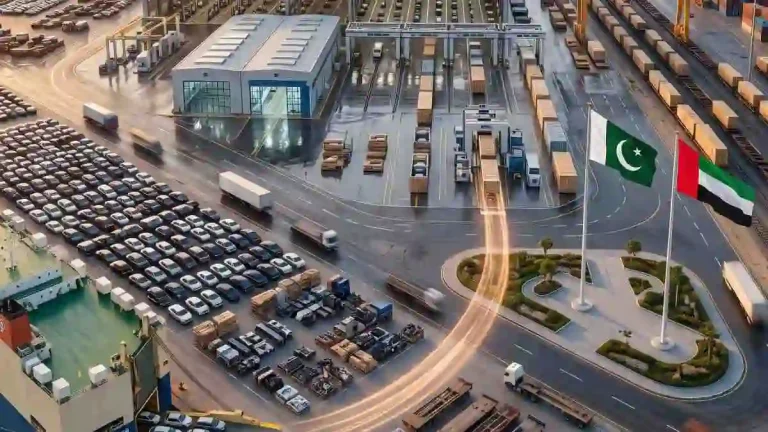
Pakistan’s government is developing a pilot project to import, refurbish and re-export used vehicles and their auto parts based on a similar model adopted by the UAE. The UAE imports used vehicles into a free zone in its Jebel Ali city, where they are refurbished to meet international standards and then re-exported, bypassing local registration. This has enabled the Gulf country to earn valuable foreign exchange and establish itself as a global automotive hub.
The ECC Approval That Started It All
The Economic Coordination Committee on April 27, 2026 approved amendments to the Import-Cum-Export Scheme under the Import Policy Order 2022 and the Export Facilitation Scheme 2021 to allow the temporary import of used vehicles and auto parts for repair, refurbishment and subsequent re-export under a pilot project, with directions for review after one year. The ECC meeting was chaired by Federal Minister for Finance and Revenue Senator Muhammad Aurangzeb.
The approval was not sudden. The SIFC has been working on this project since October 2023 and this year facilitated the alignment of regulatory frameworks under Pakistan’s Import Policy Order 2022 and Export Facilitation Scheme 2021 during the first quarter. The project remained stalled for years because of what officials described as “multi-agency regulatory misalignment” involving the ministries of industries and production and commerce, as well as the Federal Board of Revenue and the Engineering Development Board.
That misalignment — which kept a commercially viable idea locked in inter-ministerial limbo for over two years — has now been resolved. The ECC approval formally unlocks the first stage of what could become one of Pakistan’s most significant export industries.
What IRE Means: Import, Refurbish, Export
The scheme is called the Import-Refurbishment-Export model — IRE — and its mechanics are specific.
The IRE scheme is designed to create a licensed industry for importing used vehicles, refurbishing them domestically and then exporting the refurbished vehicles from Pakistan to different destinations of the world. By leveraging duty suspension and export facilitation, the policy seeks to stimulate investment in specialised refurbishment facilities, generate export revenues and integrate Pakistan into the global automotive value chain.
The framework would operate under the Export Facilitation Scheme and Import Policy Order 2022, while the Federal Board of Revenue may amend the relevant regime to facilitate the scheme. Vehicles imported under the IRE mechanism would not be allowed to enter the local market. Each vehicle, or batch of vehicles, would have to be re-exported within nine months from the date of import. Limited extensions may be granted in exceptional cases, subject to valid justification and additional financial security. Failure to re-export vehicles within the prescribed period would be treated as a violation of the policy, and the FBR may take action under its rules and regulations.
The nine-month window is tight by design. It prevents IRE from becoming a backdoor for cheap imported cars to enter the domestic market — the central fear that domestic automakers have expressed every time used-car import liberalisation has been discussed.
Who Can Participate: Eligibility Rules
The framework is not open to individual importers or informal traders. It is deliberately structured for registered, verified corporate operators.
Only duly registered companies may operate in the IRE sector. Operators must be incorporated under the Companies Act and have sufficient financial and technical capacity, including a demonstrated business plan for refurbishment and export. IRE firms must obtain specific approval from the Ministry of Commerce or Industries as a sectoral export project and register under the EFS for the IRE sector. They must also demonstrate that their facility has the required refurbishment infrastructure as verified by the Engineering Development Board.
The eligibility criteria and procedures are defined for any qualified operator on a sectoral basis, not a single pilot company, under the Export Facilitation Scheme and Import Policy Order 2022, giving the Federal Board of Revenue authority to amend the relevant regime to facilitate the same.
This is a significant structural distinction from how the scheme was initially discussed. Rather than a government-selected single operator running a prototype project, the IRE framework opens on a sector-wide basis — meaning any company that meets the criteria can enter.
The Numbers: $30 Million to Start, $300 Million to Scale
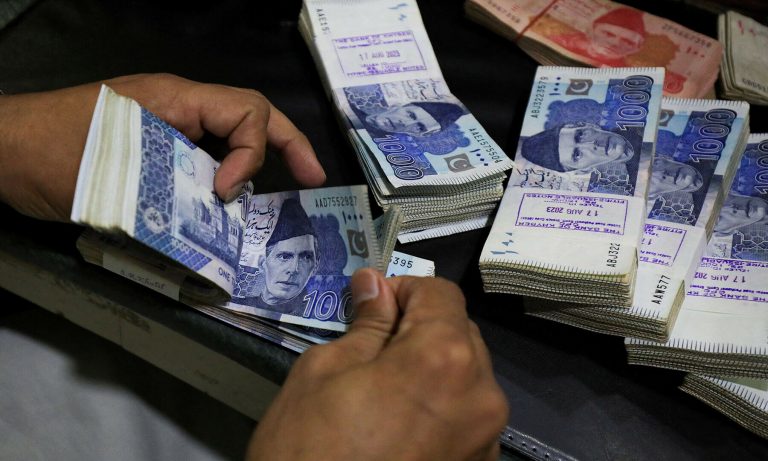
The IRE venture is expected to draw an initial investment of as much as $30 million, which could scale to about $300 million and lead to a significant increase in the country’s exports as well as create jobs.
According to officials, the project remained delayed for years due to regulatory differences between several departments. The aligned regulatory frameworks are aimed at establishing Pakistan’s first Import-Refurbishment-Export model for used vehicles and auto parts. The project is expected to attract initial investment of $20–30 million, with potential to scale up to nearly $300 million over time, while generating export earnings and employment opportunities.
For context on why this matters: Pakistan’s total exports have been struggling. Exports declined by more than 6 percent to $25.2 billion during the current fiscal year through April, compared to $26.9 billion in the same period last year, according to the Pakistan Bureau of Statistics. Against that backdrop, a potential $300 million automotive export industry — one that uses existing local skills and requires no new raw material — represents real and meaningful diversification.
Why the Gulf War Made This Urgent
The IRE proposal existed long before the Iran war. What the war did was accelerate its timeline.
In the aftermath of the Gulf war, this proposal has been pushed hard by the Special Investment Facilitation Council as it can become a good business in the country.
The logic is direct. Jebel Ali — the port and free zone that served as the world’s primary used-car refurbishment and re-export hub — was directly struck by Iranian missiles in February 2026. Operations were suspended. The Gulf’s automotive re-export ecosystem, which had been one of the UAE’s most reliable foreign-exchange earners, was thrown into disarray.
For Pakistan, that disruption opened a gap in the global automotive value chain at precisely the moment Pakistan was being recognised as a credible alternative logistics and processing hub — as demonstrated by the surge in transshipment traffic at Karachi, Port Qasim and Gwadar. The IRE scheme is, in part, a direct attempt to capture the automotive segment of the business that is diverting away from Gulf hubs.
The Auto Policy 2026–31: IRE as a Pillar
The ECC approval is the legal foundation. The strategic framework is the Auto Policy 2026–31, which is still being finalised.
The auto policy is currently in negotiation with the International Monetary Fund, and will then be tabled before the federal cabinet. The auto policy has proposed establishment of import refurbishment export of used vehicles in order to give impetus to boost up exports. It will replicate the international practice on the pattern of Dubai or Jebel Ali. It provides duty suspension incentives under the Export Facilitation Scheme.
The authorities have incorporated the IRE initiative in the draft Auto Policy 2026–31, thus positioning Pakistan for integration into the global automotive refurbishment and re-export value chain. The new auto policy is being finalised in consultations with industry stakeholders such as the Pakistan Automotive Manufacturers’ Association and the Pakistan Association of Automotive Parts and Accessories Manufacturers.
The fact that the IRE scheme is being negotiated with the IMF before cabinet approval indicates that it forms part of the broader economic reform and export diversification agenda the Fund is evaluating. Its inclusion in the auto policy — a five-year sector framework — signals institutional commitment rather than a temporary emergency measure.
What Domestic Automakers Fear — And Why the Government Disagrees
The auto industry’s anxiety is not new. Every time used-car import liberalisation has been discussed in Pakistan, the same objections arise from the same voices.
Auto manufacturers, assemblers and parts makers in Pakistan — including Toyota, Honda, Suzuki, Hyundai, Kia Motors and Changan Automobile — have in the past voiced fears that the move to allow the import of used cars in Pakistan would inflict heavy losses on their businesses and ultimately lead to the closure of their manufacturing plants.
The government’s answer to this objection is the 100% export mandate.
The government would not allow the imported cars to be resold in the domestic market. Some additional provisions have been introduced to prevent misuse of the IRE. The scheme requires that 100 percent of the vehicles will be exported, and no quantity can be supplied in the domestic market.
The framework would be applied on a sector-wide basis rather than through a single pilot project, while vehicles imported under the IRE mechanism would not be allowed to enter the local market.
This distinction is the load-bearing pillar of the policy’s political viability. If Pakistan’s assembled-car manufacturers believe the 100% export mandate will be enforced credibly, opposition softens considerably. The one-year review mechanism serves as a further reassurance — the ECC can course-correct if misuse emerges.
How Dubai Built Its Model — And What Pakistan Can Learn
The UAE’s Jebel Ali Free Zone used vehicle hub is one of the most studied models in global automotive trade. Understanding how it works helps explain what Pakistan is attempting.
The Jebel Ali model works on several reinforcing advantages: duty-free import into the free zone, globally recognised workshops and inspection processes, transparent auction and pricing systems, deep shipping connectivity, and regulatory certainty for buyers and sellers. A used car from Japan, Korea, or Europe enters the free zone, is inspected and refurbished, receives internationally recognised certification, and is exported to buyers across Africa, South Asia and the Middle East — often at 30–50% below the cost of a new vehicle in those markets.
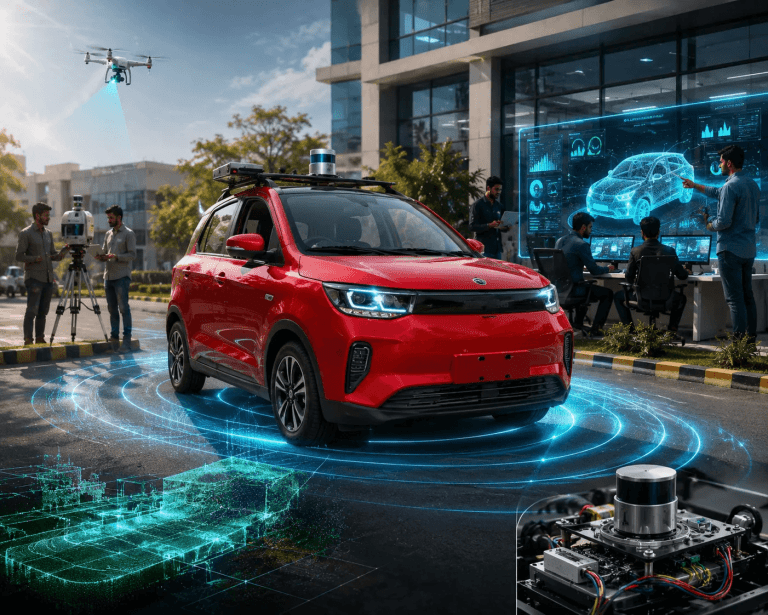
Pakistan has most of the enabling factors: skilled mechanics, established auto parts manufacturing, port infrastructure through Gwadar and Karachi, and a geographic position between South Asia, Central Asia and the Gulf. What it lacked until April 27, 2026 was the legal framework and the regulatory alignment to operate professionally at scale. The ECC approval provides both.
The Safeguards: Preventing Misuse
The scheme’s architects clearly anticipated the most common forms of misuse — and built barriers against them.
EDB Certification: Every IRE operator must have their refurbishment facility physically verified by the Engineering Development Board before operations begin. This prevents paper companies from exploiting duty suspension without running genuine refurbishment operations.
Nine-Month Export Deadline: Every imported vehicle or batch must exit Pakistan within nine months. This window is long enough for meaningful refurbishment but short enough to prevent vehicles from quietly entering the domestic market.
FBR Enforcement: Failure to re-export within the prescribed period triggers FBR action under existing rules. The financial guarantee mechanism — standard under the Export Facilitation Scheme — provides additional security against non-compliance.
One-Year Review: The ECC has directed a formal review of the scheme after one year. This creates a structured accountability checkpoint that allows the government to expand, modify or cancel the scheme based on actual outcomes rather than projections.
The Opportunity in Plain Numbers
The global used-car market is enormous and growing. Estimates from the International Organisation of Motor Vehicle Manufacturers put annual global used-vehicle trade above 50 million units. Africa alone absorbs several million used vehicles per year — primarily from Japan, South Korea and Europe — with the UAE serving as the primary refurbishment and redistribution hub for South and East African markets.
If Pakistan captures even a fraction of the refurbishment capacity that Jebel Ali’s disruption has vacated, the export impact is measurable. At an average refurbishment value-add of $500–1,000 per vehicle and export volume of even 30,000 to 50,000 vehicles annually — a conservative figure for a mature operation — Pakistan’s IRE sector would generate $150–$300 million per year in export receipts, plus associated logistics, parts and services revenue.
That is before accounting for the employment multiplier — skilled mechanics, paint shop technicians, diagnostic engineers, logistics coordinators and compliance personnel — across workshops that would likely cluster near Karachi Port, Port Qasim and eventually Gwadar’s Free Zone.
Frequently Asked Questions (FAQs)
Q: What is the IRE scheme and when was it approved?
The Import-Refurbishment-Export scheme is a government policy allowing licensed Pakistani companies to temporarily import used vehicles and auto parts, refurbish them to international standards, and re-export them without selling in the domestic market. It was approved by the Economic Coordination Committee on April 27, 2026, through amendments to the Import Policy Order 2022 and Export Facilitation Scheme 2021.
Q: Will imported refurbished cars be available for sale in Pakistan?
No. The scheme explicitly prohibits the sale of any imported vehicle in the domestic market. A strict 100% export mandate applies to all vehicles and parts brought in under the IRE framework. Failure to re-export within nine months triggers enforcement action by the Federal Board of Revenue.
Q: What is the financial scale of this initiative?
The IRE scheme is expected to attract an initial investment of $20–30 million in its pilot phase, with potential to scale to approximately $300 million as the sector matures. Officials project meaningful growth in export earnings and job creation, though specific employment figures have not been disclosed.
Q: Who can set up an IRE facility in Pakistan?
Only companies registered under the Companies Act and possessing sufficient financial and technical capacity may operate in the IRE sector. Operators must obtain approval from the Ministry of Commerce or Industries, register under the Export Facilitation Scheme, and have their refurbishment facility physically verified by the Engineering Development Board.
Q: Why is the Gulf war relevant to this policy?
The Jebel Ali Port and Free Zone in the UAE — the world’s primary used-car refurbishment and re-export hub — was damaged during Iranian missile strikes in February 2026, disrupting global automotive re-export flows. Pakistan’s SIFC accelerated the IRE framework to position Pakistan as an alternative refurbishment hub, capturing business diverted from the Gulf.
Q: Is this scheme part of the new Auto Policy 2026–31?
Yes. The IRE initiative has been formally incorporated into the draft Auto Policy 2026–31, currently being finalised through IMF negotiations and stakeholder consultations with PAMA and PAAPAM before tabling before the federal cabinet. Its inclusion in the five-year policy framework signals long-term institutional commitment rather than a temporary measure.
About the Author