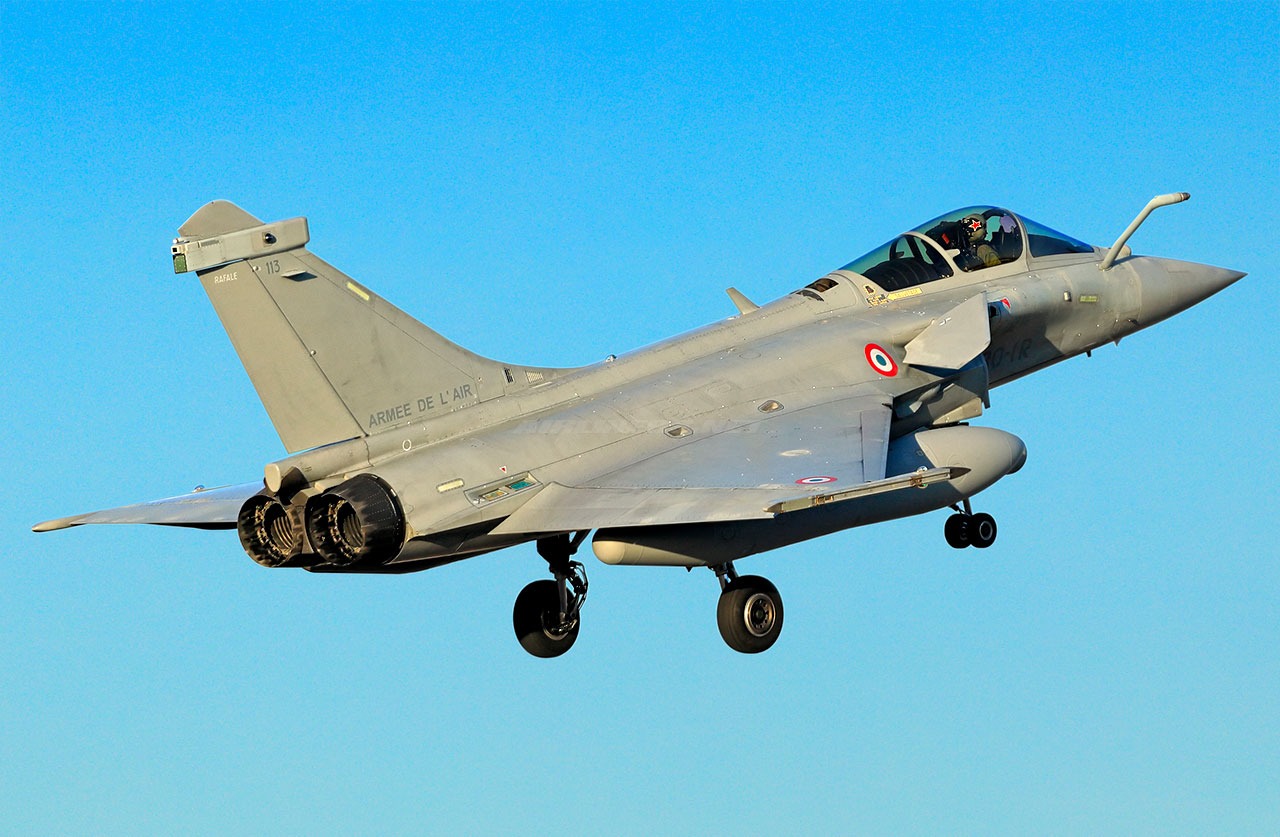
Dassault Rafale
The Dassault Rafale is one of the most advanced multirole fighter jets in service today. Built by the French aerospace company Dassault Aviation, the Rafale has carved a reputation for being versatile, deadly, and reliable. It is not just a fighter jet—it is a symbol of France’s military innovation and independence from foreign defense technologies.
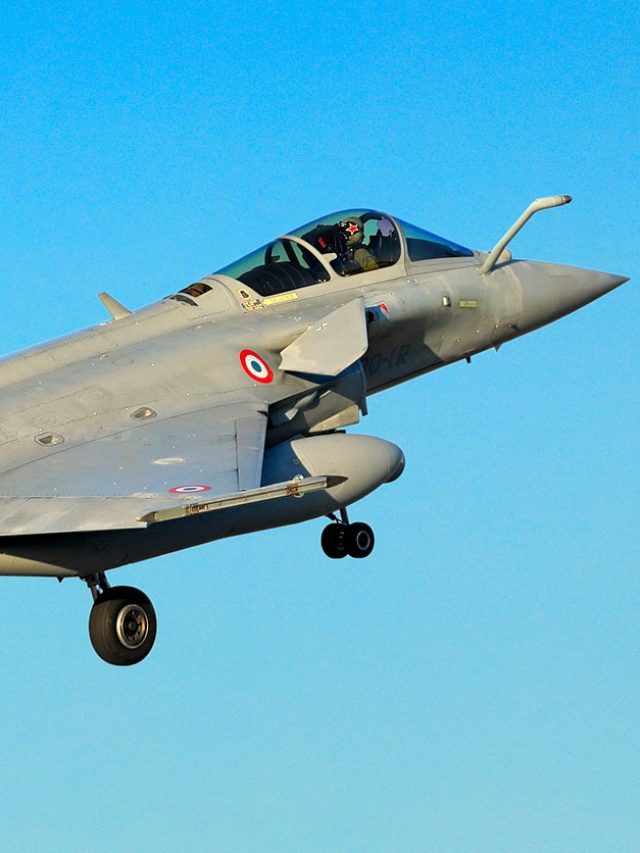
The development of the Rafale began in the 1980s when France realized it needed a new-generation fighter to replace several aging aircraft, including the Mirage 2000 and Super Étendard. Initially, France partnered with European allies to develop a common fighter project, but due to political disagreements and different military requirements, France decided to proceed alone. This independence led to the birth of the Dassault Rafale, which made its first flight in 1986. After years of testing and refinement, it officially entered service with the French Navy in 2004 and the French Air Force in 2006.
France designed the Rafale as an “omnirole” fighter, meaning it can perform a wide range of missions: air superiority, reconnaissance, ground support, nuclear deterrence, and maritime strike. Unlike single-role fighters, Rafale was built to adapt to various missions without needing separate variants. This flexibility has made it a valuable asset in modern combat, where versatility often trumps specialization.
Read More: Pakistan hits multiple Rafales in the Air Combat against India
Role in Modern Warfare
The Rafale has participated in several real-world combat missions, showcasing its capability. It has been used in Afghanistan for precision strikes, in Libya for enforcing no-fly zones, in Mali for counterterrorism operations, and in Syria and Iraq against ISIS. Its ability to carry out simultaneous air-to-air and air-to-ground missions sets it apart from many of its competitors.
In today’s rapidly changing combat environment, where electronic warfare, stealth, and network-centric operations dominate, the Rafale proves its worth by blending traditional dogfighting capabilities with state-of-the-art technology. It remains a critical backbone of French defense and a competitive export product for nations seeking a balance between performance, affordability, and operational flexibility.
Design and Structure of Dassault Rafale
The Rafale is a marvel of aerospace engineering, designed with both agility and survivability in mind. Its aerodynamic layout, stealth features, and robust structure make it one of the most reliable fighters in the world.
Aerodynamic Design
One of the most striking features of the Rafale is its delta wing configuration combined with canards. The delta wing allows for excellent high-speed performance, while the canards provide additional lift and maneuverability. This design gives the Rafale superb agility, making it highly capable in close-range dogfights and evasive maneuvers.
The aircraft’s blended wing-body structure reduces drag and improves fuel efficiency. The design is optimized not only for speed but also for endurance, allowing the Rafale to operate efficiently at both low and high altitudes.
Stealth Capabilities
Although not a full stealth aircraft like the F-35, the Rafale incorporates several stealth features. It has radar-absorbing composite materials, reduced radar cross-section through its aerodynamic shape, and low observable exhaust systems that minimize infrared signatures. These measures don’t make it “invisible,” but they greatly reduce detection range by enemy radars.
Additionally, its electronic warfare suite enhances survivability by jamming, deceiving, or avoiding enemy detection systems. In modern warfare, where stealth is often as important as firepower, Rafale strikes a balance between affordability and stealth efficiency.
Materials and Durability
The Rafale is built using advanced composite materials and lightweight alloys that give it strength without compromising weight. About 70% of the airframe is made of carbon-fiber composites, titanium, and aluminum-lithium alloys. This ensures durability in harsh combat environments and reduces maintenance requirements.
Its modular structure allows for easier upgrades and repairs, meaning the aircraft can evolve with technological advancements. This design philosophy ensures that Rafale won’t become obsolete quickly, even in the face of rapidly evolving next-generation fighters.
Technical Specifications of Dassault Rafale
The Rafale’s technical specifications showcase its balance of speed, agility, and versatility. It is not the fastest jet in the world, but it is designed to perform consistently across a variety of combat roles.
Dimensions and Weight
- Length: 15.27 meters (50.1 ft)
- Wingspan: 10.8 meters (35.4 ft)
- Height: 5.3 meters (17.4 ft)
- Empty Weight: 10,300 kg (22,700 lbs)
- Maximum Takeoff Weight: 24,500 kg (54,000 lbs)
These dimensions place the Rafale in the medium-weight fighter category, giving it a balance between small, agile fighters and heavy long-range jets.
Engine and Powerplant
The Rafale is powered by two Snecma M88-2 turbofan engines, each capable of producing 50 kN of dry thrust and 75 kN with afterburner. These engines are highly efficient, designed for both supersonic speed and fuel economy during extended missions.
The twin-engine configuration gives the Rafale better safety and redundancy compared to single-engine fighters like the F-35. If one engine fails, the other can keep the jet airborne, a crucial factor in combat survival.
Performance (Speed, Range, Altitude)
- Maximum Speed: Mach 1.8 (1,912 km/h / 1,188 mph)
- Combat Range: 1,850 km (1,150 miles)
- Ferry Range (with drop tanks): 3,700 km (2,300 miles)
- Service Ceiling: 50,000 ft (15,240 meters)
- Rate of Climb: 304 m/s (1,000 ft/s)
These performance figures show that while Rafale is not the absolute fastest jet in the world, it is optimized for versatility, endurance, and combat effectiveness. Its ability to supercruise (fly at supersonic speeds without afterburner) makes it efficient for long-range missions.
Read More: China Unveils that most advanced Military Equipment
Avionics and Radar Systems
Avionics and radar are the “brains” of any modern fighter jet. Rafale’s advanced electronic systems give it a significant edge in situational awareness and survivability.
RBE2 AESA Radar
The Rafale is equipped with the RBE2 AESA (Active Electronically Scanned Array) radar, one of the most advanced in the world. This radar can track multiple air and ground targets simultaneously, even in cluttered environments. AESA technology allows for faster scanning, longer detection ranges, and resistance to jamming.
It can track up to 40 targets at once and engage several simultaneously, making Rafale extremely lethal in beyond-visual-range combat.
Electronic Warfare Suite
The Rafale is fitted with the SPECTRA electronic warfare system, developed by Thales. SPECTRA provides threat detection, radar warning, jamming, decoy deployment, and even missile approach warning. This system enhances survivability by giving pilots more time to react to enemy threats.
Sensor Fusion and Targeting Systems
One of Rafale’s biggest strengths is sensor fusion—the ability to combine inputs from radar, infrared sensors, electronic warfare systems, and targeting pods into one coherent display for the pilot. This drastically reduces pilot workload and improves decision-making in high-stress combat.
The Front Sector Optronics (FSO) system provides long-range infrared search and track (IRST) capabilities, allowing Rafale to detect stealth aircraft or heat signatures without using radar, which could expose its position.
Weapons and Combat Capability
A fighter jet’s effectiveness is ultimately measured by its weapons. The Rafale is armed to the teeth, capable of carrying a wide range of munitions for different missions.
Air-to-Air Weapons
For air superiority missions, Rafale can carry:
- MICA missiles (infrared and radar-guided) for medium-range combat
- Meteor missiles, one of the most advanced beyond-visual-range missiles with a range of over 150 km
- Magic II missiles for short-range dogfights
- Internal GIAT 30 mm cannon for close combat
Air-to-Ground Weapons
Rafale can deliver precision strikes using:
- SCALP-EG cruise missiles for deep-strike missions
- AASM Hammer guided bombs (GPS, laser, or infrared-guided)
- Conventional and laser-guided bombs for tactical strikes
Nuclear Strike and Maritime Strike Capabilities
One of the unique aspects of Rafale is its nuclear deterrence role. It is capable of carrying the ASMP-A nuclear cruise missile, making it a key pillar of France’s nuclear triad.
For maritime roles, Rafale can deploy AM39 Exocet anti-ship missiles, giving it a powerful naval strike capability.
This weapons versatility ensures that Rafale is not just a fighter—it is a complete war machine capable of dominating multiple domains of warfare.
Dassault Rafale in Combat Missions
The Dassault Rafale has more than proven itself in actual combat operations. While many modern fighters remain “paper tigers” that look good in specifications but rarely see real-world combat, Rafale has been tested across multiple battlefronts and delivered remarkable results.
Air Superiority Missions
Air superiority is one of the most critical roles for any modern fighter jet. The Rafale excels in this domain thanks to its agility, advanced radar, and powerful weapons. Its Meteor beyond-visual-range missile provides an unmatched edge, enabling pilots to engage enemy aircraft long before they come within striking distance.
Rafale has been deployed in NATO operations, where it successfully maintained air dominance in contested airspaces. Its sensor fusion system gives pilots a clear, comprehensive view of the battlefield, making it difficult for enemy aircraft to gain a tactical advantage.
Additionally, Rafale’s ability to switch roles mid-mission allows it to maintain air superiority while simultaneously conducting reconnaissance or strike missions. This flexibility ensures that a single Rafale squadron can control the skies effectively, even against larger enemy formations.
Ground Attack and Precision Strikes
The Rafale is also designed for ground attack missions, and its precision strike capability is one of its strongest features. Armed with SCALP-EG long-range cruise missiles and AASM Hammer smart bombs, it can destroy high-value targets with pinpoint accuracy.
In Afghanistan, Rafales supported coalition forces by delivering precision strikes against Taliban strongholds. During NATO’s intervention in Libya, Rafale jets were among the first to strike targets, neutralizing radar installations and armored vehicles. These missions highlighted its ability to operate deep inside enemy territory while avoiding detection and neutralizing threats.
The aircraft’s targeting systems, including laser designation pods, allow it to guide weapons accurately, even in adverse weather or heavily defended environments. This makes Rafale a preferred choice for missions requiring surgical precision with minimal collateral damage.
Carrier Operations
Unlike many of its competitors, the Rafale is fully capable of carrier-based operations. The Rafale M variant serves with the French Navy on the aircraft carrier Charles de Gaulle. Carrier operations demand rugged design, reinforced landing gear, and folding wings for storage efficiency—features Rafale M incorporates seamlessly.
Carrier-capable Rafales extend France’s ability to project power globally, allowing rapid deployment of airpower to distant conflict zones. This capability also demonstrates Rafale’s versatility and engineering superiority, as few aircraft are capable of serving both air force and naval operations without major design compromises.
Comparison with Competitor Fighter Jets
When comparing the Dassault Rafale to its global competitors, it becomes clear why the aircraft has attracted international buyers. While it may not surpass every jet in a single category, its balance of versatility, cost-effectiveness, and combat-proven reliability makes it stand out.
Dassault Rafale vs F-35 Lightning II
The F-35 is often considered the Rafale’s biggest rival. The American stealth fighter boasts superior stealth and advanced networked capabilities. However, it comes at a much higher cost and has faced criticism over reliability and maintenance issues.
- Stealth Advantage: F-35 is superior in stealth, but Rafale is harder to detect than most 4.5-generation fighters.
- Agility: Rafale outperforms the F-35 in dogfights due to its delta-canard design.
- Cost: Rafale is significantly cheaper, making it more attractive to countries seeking high capability without excessive expenses.
- Combat-Proven: Rafale has far more real-world combat experience, whereas the F-35 is still gaining operational maturity.
Dassault Rafale vs Eurofighter Typhoon
Both Rafale and Eurofighter Typhoon were born from similar European projects, but their paths diverged.
- Agility and Dogfighting: Both are highly maneuverable, but Rafale’s multirole flexibility gives it an edge.
- Weapons: Eurofighter has excellent air-to-air capabilities, but Rafale carries a more diverse set of weapons, including nuclear strike options.
- Operational Use: Rafale has been combat-proven across multiple theaters, while Typhoon has seen more limited use in actual combat.
Dassault Rafale vs Sukhoi Su-35
The Su-35 is Russia’s flagship 4.5-generation fighter, known for its raw power and supermaneuverability.
- Maneuverability: Su-35 has thrust-vectoring engines, making it extremely agile. Rafale, while agile, doesn’t match Su-35 in raw aerobatic performance.
- Avionics: Rafale’s advanced AESA radar and sensor fusion surpass the Su-35’s systems, giving it superior situational awareness.
- Combat Proven: Rafale has an edge in proven battlefield reliability, whereas Su-35 has limited operational history outside of demonstrations.
In short, while Rafale may not dominate in every single metric, it offers a balanced package that often makes it the better long-term investment for air forces around the world.
Operational Advantages of Dassault Rafale
So, what makes Rafale so attractive to air forces globally? The answer lies in its unique combination of versatility, cost-effectiveness, and adaptability.
Multirole Flexibility
Rafale’s design philosophy of being an “omnirole” fighter sets it apart. Instead of building specialized aircraft for air superiority, ground attack, and naval missions, Rafale can do it all. This means fewer aircraft types need to be maintained, reducing logistics costs while improving operational readiness.
Cost-Effectiveness
Compared to American fighters like the F-35 or F-22, Rafale is more affordable both in acquisition and operational costs. Nations with budget constraints, like India and Egypt, found Rafale to be the perfect balance between affordability and advanced capability.
Maintenance and Upgradability
The Rafale’s modular design makes it relatively easy to maintain. Its systems are designed for upgrades, ensuring it will remain relevant well into the 2030s and 2040s. Unlike some aircraft that become outdated quickly, Rafale has a long lifecycle and can evolve with technology.
Countries Operating Dassault Rafale
The Rafale has become an export success story, with multiple nations choosing it as their frontline fighter.
French Air Force and Navy
France remains the primary operator, using Rafales across its air force and navy. They form the backbone of French military power projection, ensuring France maintains autonomy in defense without over-reliance on foreign suppliers.
Indian Air Force
India signed a landmark deal for 36 Rafale jets, citing the aircraft’s superior combat capability, long range, and nuclear strike ability. In India, Rafale has been deployed in forward bases near the Chinese border, underscoring its strategic role in countering regional threats. India plans to procure more of such fighter jets as India lost a big number of fighter jets in the past one year and now is in urgent need of increasing its fleet.
Other International Operators
Countries such as Egypt, Qatar, and Greece have also purchased Rafales, demonstrating its appeal beyond Europe. Ongoing negotiations with other nations show that Rafale’s export footprint will likely continue to grow.
Future of Dassault Rafale
The Rafale may already be one of the most advanced fighter jets in service, but Dassault Aviation isn’t slowing down. With the rapid evolution of aerial combat, continuous upgrades are necessary to keep the Rafale competitive against fifth- and sixth-generation fighters.
Planned Upgrades and Enhancements
France has already begun working on the Rafale F4 standard, an upgraded variant with improved avionics, enhanced radar capabilities, better networking systems, and more advanced weapons integration. This includes improved Meteor missile support, next-generation data links for network-centric warfare, and even artificial intelligence features to assist pilots in decision-making.
Future upgrades may include stealth improvements, more efficient engines, and enhanced electronic warfare systems to counter emerging threats. These continuous updates ensure Rafale won’t become obsolete anytime soon, even in the face of the F-35, Su-57, or upcoming sixth-generation fighters.
Role in Future Conflicts
In the coming decades, Rafale will likely remain central to French and allied military strategies. With its proven multirole flexibility, it can adapt to both conventional warfare and asymmetric conflicts. Its nuclear strike role also ensures France retains an independent strategic deterrence capability.
As drone warfare and electronic warfare continue to evolve, Rafale’s advanced SPECTRA system and sensor fusion will allow it to counter increasingly complex threats, including stealth drones and hypersonic missiles.
Competition from Next-Generation Fighters
Despite its strengths, Rafale will eventually face tough competition from next-generation aircraft like the American NGAD (Next Generation Air Dominance) program, Europe’s FCAS (Future Combat Air System), and Britain’s Tempest fighter project.
However, Rafale’s cost-effectiveness and reliability ensure it will continue to dominate the export market for countries not yet ready—or willing—to commit to extremely expensive next-gen programs.
Cost and Export Market
One of Rafale’s most appealing aspects for buyers is its balance between high performance and relatively manageable costs.
Price per Unit
The cost of a Rafale varies depending on configuration, weapons package, and support systems. On average, a Rafale costs around $90–120 million per unit, which is more affordable than the F-35 (which often exceeds $130 million per unit when including support).
Export Deals and Negotiations
Rafale has seen significant export success, particularly in the last decade. Countries like India, Egypt, Qatar, and Greece have signed major deals, boosting France’s defense exports. The aircraft’s combat-proven track record has made it a preferred choice for nations seeking a reliable and versatile fighter without political strings attached.
Other nations, including Indonesia and the UAE, have also signed contracts for Rafales, ensuring Dassault Aviation has a strong export pipeline.
Economic Impact on France
The Rafale program has been a major driver for the French aerospace industry, sustaining thousands of jobs and maintaining France’s position as one of the few nations capable of producing top-tier fighter aircraft independently. The success of Rafale exports has strengthened France’s influence in global defense markets while ensuring technological sovereignty.
Strengths and Weaknesses of Dassault Rafale
No fighter jet is perfect, and the Rafale, while outstanding, has its share of strengths and limitations.
Key Strengths
- Multirole versatility: Can seamlessly switch between air-to-air, air-to-ground, and naval operations.
- Combat-proven reliability: Extensive use in real conflicts has validated its effectiveness.
- Advanced avionics: AESA radar, SPECTRA electronic warfare suite, and sensor fusion provide unmatched situational awareness.
- Cost-effectiveness: More affordable to buy and operate compared to American fifth-generation jets.
- Nuclear capability: Provides strategic deterrence role that many competitors lack.
Limitations and Criticisms
- Not a full stealth aircraft: Lacks the extreme stealth of the F-35 or F-22.
- Speed limitations: While agile, it doesn’t match the sheer thrust of jets like the Su-35 in raw performance.
- Export competition: Faces stiff competition from cheaper Russian and Chinese jets, as well as more advanced American fighters.
- Upgrade race: Must continuously evolve to remain relevant against upcoming sixth-generation fighters.
Expert Opinions and Reviews
The Rafale has received strong praise from both military analysts and pilots who have flown it.
Military Analysts’ Views
Experts often describe the Rafale as the “Swiss Army knife of fighter jets.” It may not be the absolute best in every category, but it delivers a complete package that most air forces find more practical than highly specialized aircraft. Its proven combat record further boosts confidence among analysts, who view it as one of the most balanced fighters in service today.
Pilot Experiences
Pilots consistently highlight Rafale’s agility, cockpit ergonomics, and ease of handling. The aircraft’s advanced avionics reduce workload, allowing pilots to focus more on mission objectives than on managing controls. Many note that Rafale “feels natural” to fly, even in demanding situations like high-G maneuvers or complex strike missions.
Conclusion
The Dassault Rafale stands as one of the most versatile, reliable, and combat-proven fighter jets in the world today. Its unique blend of agility, advanced avionics, diverse weapons systems, and cost-effectiveness makes it a favorite among nations seeking a cutting-edge multirole fighter without the extreme costs of American stealth jets.
While it may not match the F-35 in stealth or the Su-35 in raw power, the Rafale’s balance of multirole adaptability, combat experience, and affordability ensures its place as one of the best fighter jets of the 21st century. With planned upgrades, growing exports, and a solid future roadmap, the Rafale will remain a dominant force in global skies for decades to come.
About the Author