Super Mushak
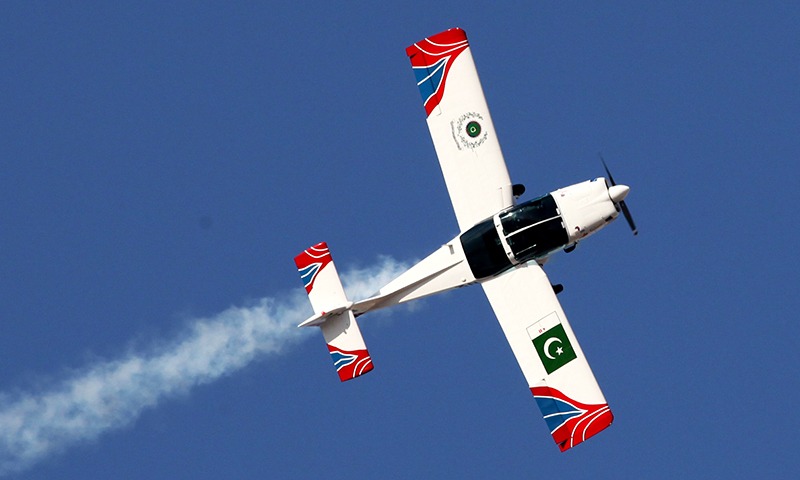
In the world of high-stakes aerospace competition, the most successful aircraft aren’t always the loudest or the fastest. While supersonic fighters like the JF-17 capture the headlines, the PAC MFI-395 Super Mushshak has quietly become the backbone of Pakistan’s defense industry.
Often called “The Proficient,” this rugged trainer has transformed from a licensed Swedish design into a global bestseller, serving as a masterclass in how a developing nation can achieve industrial self-reliance.
The Swedish Roots and the Pakistani Vision
The story began in the 1970s. The Pakistan Air Force (PAF) was in dire need of a primary trainer—a “starter” plane that could weed out students who weren’t cut out for the cockpit while providing a forgiving platform for those who were. They looked toward Sweden and the Saab MFI-17 Supporter.
However, Pakistan’s leadership knew that simply buying planes wasn’t enough. To ensure national security, they needed to build them. In 1975, the newly established Pakistan Aeronautical Complex (PAC) at Kamra began assembling these planes from kits. By 1981, Pakistan had secured the full manufacturing rights, and by 1983, they weren’t just “assembling” anymore—they were building the aircraft from scratch on Pakistani soil.
Evolution: From “Mushshak” to “Super Mushshak”
By the mid-1990s, the aviation world was changing. Cockpits were becoming more digital, and training requirements were becoming more demanding. PAC didn’t just stick to the old blueprints; they re-engineered the platform.
They swapped the original engine for a muscular 260 hp Textron Lycoming power plant and introduced a high-tech “glass cockpit” (digital screens instead of old-school dials). This transformed the plane into the Super Mushshak, a trainer that felt like a modern jet but maintained the simple, “seat-of-the-pants” flying characteristics essential for beginners.
A Global Export Phenomenon
Today, the Super Mushshak is a rare success story of a non-Western trainer penetrating global markets. It is currently in service with over 10 air forces, spanning four continents.
- The NATO Breakthrough: One of the most significant moments for PAC was the deal with Turkey. As a NATO member with access to top-tier Western tech, Turkey’s decision to buy 52 Super Mushshaks to replace their aging T-41s and SF-260s was a massive stamp of approval for Pakistani engineering.
- The Middle Eastern Fleet: Countries like Saudi Arabia, Qatar, Oman, Iraq, and Iran have all integrated the aircraft into their academies.
- Expansion in Africa & Asia: From Nigeria and South Africa to Azerbaijan, the aircraft is favored by nations that need a plane that can survive harsh climates—from blistering desert heat to humid coastal air.
Why is it a “Game Changer”?
The secret to the Super Mushshak’s success lies in its brutal efficiency. In an era where defense budgets are under a microscope, it offers a “no-nonsense” value proposition:
1. The Cost-to-Performance Ratio
Modern turboprops can cost upwards of $1,000 per hour to fly. The Super Mushshak operates at a fraction of that, roughly $200 to $300 per hour. This allows air forces to give their student pilots more “stick time” without breaking the bank.
2. The “Hardened” Design
Most trainers require pristine, paved runways. The Super Mushshak, however, is built like a tank. Its fixed gear and high-wing design allow it to take off and land on unprepared gravel or grass strips. This makes it incredibly attractive for nations where infrastructure might be limited.
3. More Than Just a Teacher
Perhaps the biggest surprise is that this trainer can fight. It features six under-wing hardpoints. While students use it to learn loops and rolls, it can be quickly converted for Counter-Insurgency (COIN) or border patrol roles, carrying:
- Laser-guided missiles (like the Barq)
- Unguided rockets
- Reconnaissance pods
4. The Gateway Effect
For Pakistan, the Super Mushshak is the “perfect export” because it acts as a diplomatic bridge. When a country buys this trainer, they often adopt Pakistan’s training syllabus, maintenance protocols, and pilot culture. This creates a long-term partnership that often paves the way for the sale of more advanced systems like the JF-17 Block III.
Pakistan has emerged as a formidable global aircraft supplier, with PAC Kamra transforming into a buzzing hub of international aerospace commerce.
1. The “Sindoor” Effect: Validation through Combat
The air skirmishes of May 2025 served as a real-world laboratory for Pakistan’s indigenous technology. During the standoff, the JF-17 Thunder Block III was deployed in high-threat environments, facing off against modern sensors and long-range missile threats.
The success of these platforms wasn’t just a military win; it was a marketing breakthrough. For potential buyers, the message was clear: Pakistani jets aren’t just for airshows—they are built for survival in 21st-century warfare. This “combat validation” removed the hesitation many neutral nations felt about moving away from traditional Western or Russian suppliers.
2. The Triple Threat: Mushshak, K-8, and the Thunder
Pakistan’s export strategy is brilliant because it covers the entire lifecycle of a pilot, from the first day of flight school to the front lines of a supersonic dogfight.
- The Super Mushshak (The Foundation): Long considered the “perfect export,” this primary trainer has seen a surge in orders from Africa and the Middle East. Its appeal lies in its simplicity and near-indestructible design. Countries like Zimbabwe, Nigeria, and Turkey have realized that for teaching the fundamentals of flight, there is no more cost-effective platform on the planet.
- The K-8 Karakorum (The Intermediate Step): Often overlooked, the K-8 jet trainer (developed with China) has become a staple for air forces in Africa and Southeast Asia. It bridges the gap between basic props and advanced fighters, and its ability to carry light munitions makes it a dual-use asset for nations fighting internal insurgencies.
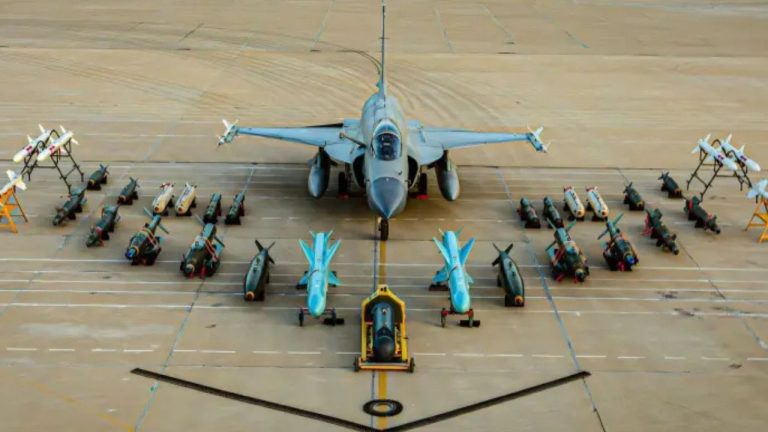
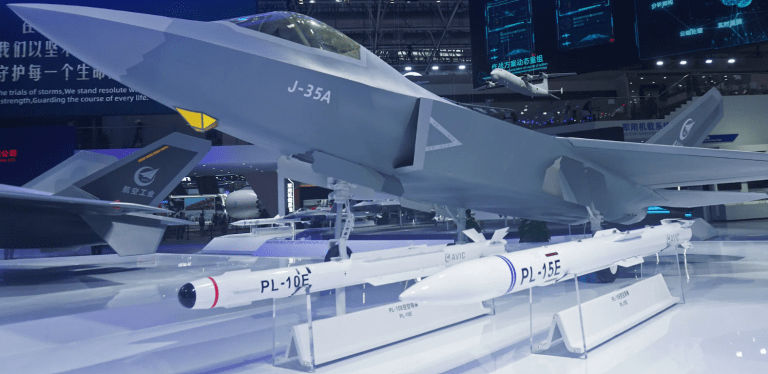
- The JF-17 Thunder (The Heavy Hitter): The Block III variant is the current star of the show. With its Active Electronically Scanned Array (AESA) radar and compatibility with long-range PL-15 missiles, it offers 4.5-generation capabilities at a fraction of the cost of a Rafale or an F-16. Recent multi-billion dollar deals with Azerbaijan and interest from Iraq and Saudi Arabia have turned the JF-17 into a genuine global contender.
3. Industrial Revolution at PAC Kamra
You cannot become a global supplier if you can’t meet the demand. To keep up with the post-2025 order book, the Pakistan Aeronautical Complex has undergone its most significant expansion since its founding in 1971.
- Expanded Assembly Lines: PAC has transitioned to more automated manufacturing processes, significantly reducing the “man-hours per airframe” required for the JF-17. This allow them to roll out jets faster to meet urgent delivery timelines for foreign clients.
- The NASTP Synergy: The creation of the National Aerospace Science and Technology Park (NASTP) has been a game-changer. It allows private tech firms and military engineers to collaborate on “black box” technologies—indigenous electronic warfare suites and radar components. This ensures that when Pakistan exports a jet, it isn’t beholden to third-party “end-user certificates” that can be used for political blackmail.
- Total Life Cycle Support: Pakistan isn’t just “selling and forgetting.” They are now setting up regional maintenance hubs. When a country buys the Thunder, they are also buying a decade-long partnership that includes pilot training in Pakistan and on-site engineering support.
4. A New Economic Frontier
The shift toward aerospace exports is more than a matter of pride; it is a vital economic lifeline. As defense contracts begin to run into the billions of dollars, the aerospace sector is positioned to become one of Pakistan’s top foreign exchange earners.
By offering high-tech hardware without the heavy political “strings” often attached to American or European sales, Pakistan has found a “Third Way” for sovereign nations to protect their skies. As we move through 2026, PAC Kamra is no longer just a repair shop for the PAF—it is a factory for the world.
Final Thoughts
The Super Mushshak proves that you don’t always need stealth technology or Mach-2 speeds to dominate the export market. By focusing on reliability, affordability, and the specific needs of developing air forces, Pakistan has created an aircraft that is, quite literally, training the world.
About the Author