EV Charging Stations in Islamabad
EV charging stations in Islamabad are still in its early stages—but it’s growing rapidly. Since the first public chargers were installed at PSO forecourts around 2020, new partnerships and infrastructure projects have rolled out AC and DC fast charging stations within the city and along the Lahore–Islamabad corridor. Here’s a detailed look at what’s available today: the types of chargers, how fast they charge, where to find them, and what you need to know before you plug in.
Read More: Punjab Government makes it Mandatory to have EV charging stations at Fuel Pumps
What’s Available Today
- Slow or AC (often called Level 2) chargers delivering roughly 3 to 22 kW using Type 2 (Mennekes) sockets—these fit many public and home-style installations.
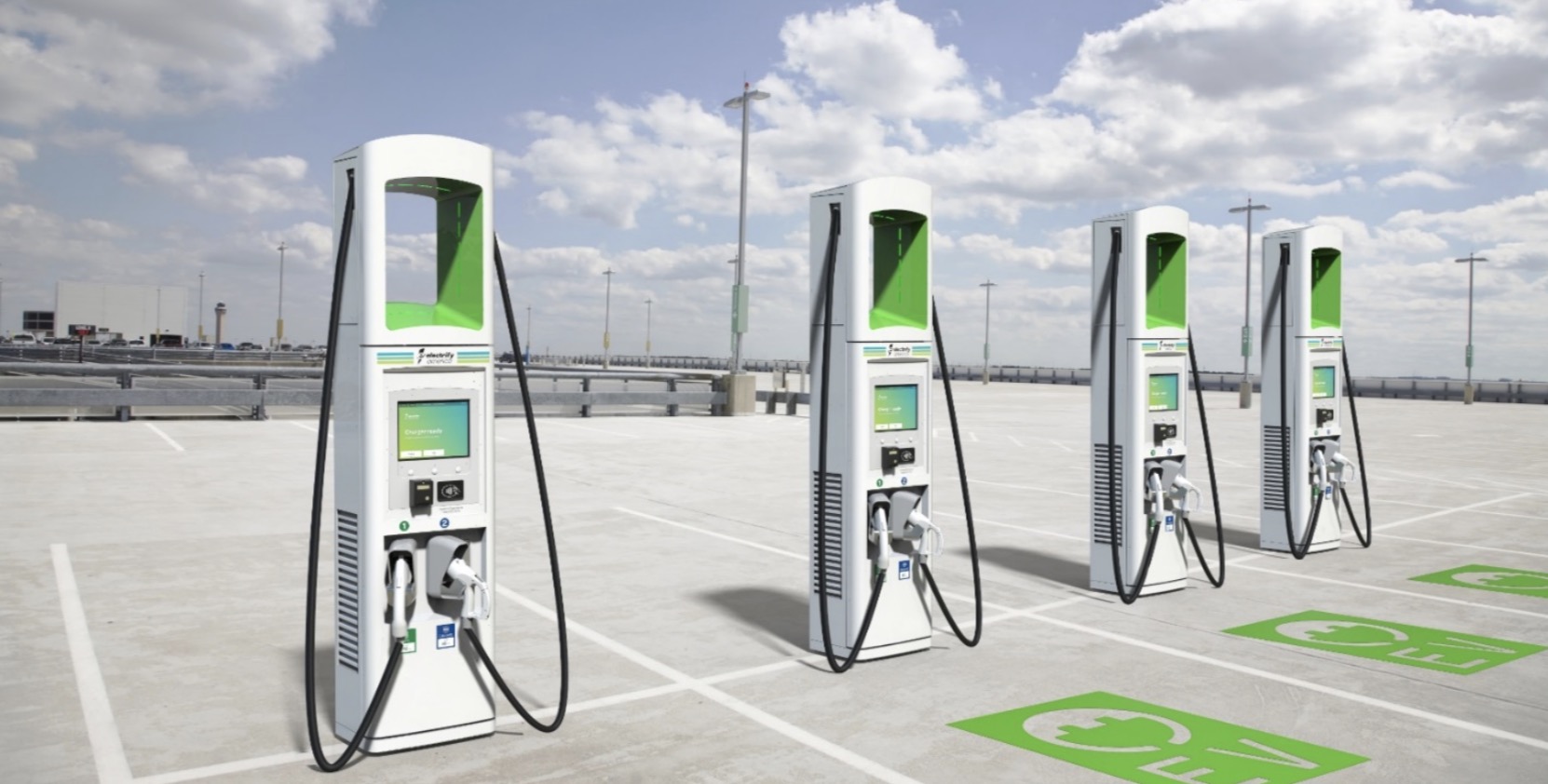
- Fast or DC chargers in the public domain: these include 50 kW units and even a new 120 kW station in Islamabad—ideal for a top-up in 30-60 minutes depending on the vehicle.
- Major players in the market: PSO (Pakistan State Oil) has led many installations, often in collaboration with companies like BYD, HUBCO Green, and GoGreen. Many of the fast-charging hubs are located at fuel stations, motorway service areas, or major city commercial zones.
How Charging Power Relates to Time (typical values)
- At 3–7 kW (AC), expect a full charge to take 8–20+ hours — useful for overnight stays.
- At 11–22 kW (AC), a typical EV might get fully charged in about 3–8 hours — practical for workplace or overnight use.
- At 50 kW (DC), many cars can go from 0 to ~80% in somewhere between ~30 and ~60 minutes.
- At 120 kW (DC), some vehicles might achieve a ~0 to ~80% charge in approximately 20–60 minutes, depending on battery size and starting state of charge.
Standards & connectors you’ll run into
- Type 2 (Mennekes) sockets: common in AC installations, both for slower public chargers and home wallboxes.
- CCS2 (Combined Charging System): increasingly found in newer DC fast chargers and compatible vehicle models.
- CHAdeMO: some public fast chargers still support this older standard (especially for certain Japanese-brand EVs).
Read more: Where can you find Electric Vehicles charging stations in Lahore
Known Charging Station Locations in Islamabad
Here are several verified or highly reported locations in Islamabad, with approximate addresses or landmarks. Because the infrastructure is still evolving, it’s worth checking live maps or apps for availability before heading out.
- PSO Capri Filling Station, F-7 Markaz, Islamabad. One of the first publicly-announced chargers in the city under PSO’s “PSO Electro” initiative.
- PSO – I-8 Markaz (a collaboration between PSO, BYD and HUBCO Green). A public charger in the commercial I-8 area offering convenient access for city drivers.
- R & I Electrical Appliances, I-10/3, Islamabad. A listing by users on charging-station maps; good option in the I-10/3 neighborhood.
- PSO / HUBCO / BYD / GoGreen motorway-service charging hub(s) on the Lahore-Islamabad corridor (M-2 motorway). These are especially useful when travelling between cities, offering DC fast-charging infrastructure at service stops.
- A significant 120 kW fast-charging station in Islamabad (announced by Pakistan’s Power Division / GoGreen). This is one of the highest-power public chargers yet in the country, suited for vehicles with fast-charge capability.
How to check live availability & map your route
Since new stations appear and some may be out of service or under maintenance, make use of live tools such as crowd-sourced mapping apps (PlugShare, Electromaps), and official operator announcements (PSO, BYD, HUBCO Green, GoGreen) to verify location, connector type, power rating, and payment method before you travel.
Technical and practical details to look out for
- Payment: Some stations may accept credit/debit cards, cash, or app/RFID-based payments. Always check the method in advance.
- Connectors: Ensure the charger supports your vehicle’s plug standard (Type 2, CCS2, CHAdeMO).
- Power & queueing: High-power DC stations reduce charge time significantly, but may be busier or have queue limits.
- Amenities: Stations at fuel forecourts or motorway service areas often have restrooms, food, and short-stay waiting options while you charge.
Why this network is growing fast in Islamabad
Government policies such as Pakistan’s National Electric Vehicle Policy, along with incentives and private-public partnerships, have focused heavily on building charging infrastructure in major cities like Islamabad. The aim is to encourage EV adoption by reducing “range anxiety” and making charging as accessible as refuelling petrol vehicles.
Tips for EV Drivers in Islamabad
- If travelling longer distances (e.g., via the M-2 motorway), rely on motorway service area fast-charging hubs—they offer higher power and are designed for travel breaks.
- Carry the right adapter for your vehicle, especially if you drive a foreign brand that uses less common plug standards.
- Before departure, check your route on a charger-map app and confirm real-time status of the station (availability, working order, payment method).
- Always ask or check what payment methods are accepted, as newer stations may require app or RFID-based payment rather than cash.
Read More: Where are Electric Vehicles charging stations located in Karachi
FAQs: EV Charging Stations in Islamabad
1. How many EV charging stations are currently available in Islamabad?
As of late 2025, Islamabad has more than a dozen public charging points, including major installations by PSO, BYD, HUBCO Green, and GoGreen. The network is expanding rapidly, with new fast-charging sites appearing at fuel stations and motorway service areas every few months.
2. Where can I find EV charging stations in Islamabad?
Some of the most reliable and accessible charging stations are located at:
- PSO Capri Filling Station, F-7 Markaz
- PSO I-8 Markaz (BYD/HUBCO Green collaboration)
- R & I Electrical Appliances, I-10/3
- Motorway service areas between Lahore and Islamabad (PSO/BYD/GoGreen hubs)
- GoGreen Avenue 120 kW fast-charging site in Islamabad
For the latest updates, it’s best to check PlugShare or similar apps for real-time locations.
3. What types of chargers are installed in Islamabad?
You’ll find two main types:
- AC Chargers (Slow/Level 2): 3–22 kW, suitable for overnight or long-duration charging.
- DC Fast Chargers: 50 kW and 120 kW units that can charge an EV up to 80% in 30–60 minutes.
4. What plug types or connectors do Islamabad chargers use?
Most public chargers offer Type 2 (Mennekes) for AC charging and CCS2 (Combined Charging System) for DC fast charging. A few stations also support CHAdeMO, which is compatible with certain Japanese EVs.
5. How long does it take to charge an EV in Islamabad?
Charging time depends on the station’s power output and your vehicle’s battery size:
- AC 3–7 kW: 8–20 hours (slow)
- AC 11–22 kW: 3–8 hours (moderate)
- DC 50 kW: 30–60 minutes (fast)
- DC 120 kW: 20–40 minutes (very fast)
6. How can I pay for charging my car?
Payment methods vary by operator. PSO and BYD hubs often accept cash, card, or mobile app payments. Newer stations are introducing RFID cards or digital wallet systems for convenience.
7. Are there any free charging stations in Islamabad?
A few early demonstration units and showroom chargers might offer free charging, but most public chargers now have usage fees based on time or kWh. Always confirm the cost through the provider’s app or on-site signage.
8. Can I install an EV charger at home in Islamabad?
Yes, many EV owners choose to install Type 2 AC chargers (3.3 kW, 7 kW, or 11 kW) at home. Licensed electricians and approved vendors can set these up, but ensure your home’s wiring and power supply meet the requirements.
9. Is the government supporting EV charging infrastructure in Islamabad?
Yes. Under Pakistan’s National Electric Vehicle Policy (NEVP), the government is working with private companies to establish nationwide charging infrastructure. Islamabad is one of the priority cities for early rollout due to its administrative and economic importance.
10. Which apps or maps can I use to find charging stations?
The most reliable platforms right now are PlugShare, ChargeMap, and GoGreen’s official app (for its own network). These show charger locations, user reviews, connector types, and live availability.
11. What should I check before going to a charging station?
Before heading out, always check:
- The station’s operating status (online/offline)
- Connector compatibility with your EV
- Payment method accepted
- Power rating (kW) to estimate charging time
- Nearby amenities, especially if charging will take an hour or more
12. Are fast chargers safe for my vehicle’s battery?
Yes, as long as the charger and your car are both designed for fast charging. Modern EVs have built-in battery management systems that regulate charge rates to protect battery health.
13. Will more EV chargers be added in Islamabad soon?
Definitely. PSO, BYD, HUBCO Green, and GoGreen have all announced expansion plans. The government’s EV policy encourages the installation of fast chargers across major roads, shopping areas, and public parking lots in Islamabad by 2026.
About the Author