Pakistan Navy Ranks
The Pakistan Navy (PN) is the maritime arm of the Pakistan Armed Forces, tasked with safeguarding the country’s maritime interests, sea trade routes, and coastal defense. Pakistan Army and Pakistan Airforce also have similar ranks that makes the overall forces the most organized and advanced for any defence or offence if needed. Like other branches of the military, the Navy operates on a strict rank hierarchy that ensures discipline, leadership, and operational effectiveness. Alongside its rank structure, the Navy has developed indigenous capabilities in ships, submarines, and technologies, strengthening its position in the region. This article outlines the ranks of the Pakistan Navy, its technological advancements, and its strategic role, particularly in maintaining balance against India.
1. Commissioned Officer Ranks
Commissioned officers in the Pakistan Navy are responsible for command, strategic planning, and operational leadership.
- Midshipman
- The entry-level training rank for officer cadets.
- Importance: Provides practical exposure to naval duties before commissioning.
- Sub-Lieutenant
- First commissioned officer rank.
- Importance: Junior officers begin their careers here, often assigned to ships or shore-based establishments.
- Lieutenant
- Equivalent to captain in the Army.
- Importance: Plays a leadership role on ships and submarines, handling specialized branches like navigation, weapons, or engineering.
- Lieutenant Commander
- Equivalent to Army major.
- Importance: Acts as executive officers on ships or commands smaller naval vessels.
- Commander
- Equivalent to lieutenant colonel.
- Importance: Commands warships, submarines, or naval aviation squadrons.
- Captain
- Equivalent to Army colonel.
- Importance: Commands large naval vessels or serves in senior staff roles.
- Commodore
- Equivalent to brigadier.
- Importance: Commands flotillas, task groups, or major naval bases.
- Rear Admiral
- Equivalent to major general.
- Importance: Senior leadership role, responsible for entire fleets or major operational commands.
- Vice Admiral
- Equivalent to lieutenant general.
- Importance: Oversees operations, training, and strategy at the national level.
- Admiral
- The highest naval rank, held by the Chief of Naval Staff.
- Importance: Provides overall leadership, policy direction, and strategic decisions for the Pakistan Navy.
2. Junior Commissioned and Non-Commissioned Ranks
- Chief Petty Officer and Petty Officers
- Importance: Act as supervisors and technical experts in navigation, communications, weapons, and engineering.
- Leading Seaman and Able Seaman
- Importance: Provide hands-on technical and operational support on ships, submarines, and bases.
- Sailor
- Entry-level naval personnel, providing essential manpower for ship operations and coastal defense.
3. Pakistan’s Indigenous Naval Technologies
The Pakistan Navy has steadily built indigenous capacity, reducing dependence on foreign suppliers and adapting technology to local requirements.
- Indigenous Warships
- PNS Azmat-class Fast Attack Craft: Locally built in collaboration with China. Equipped with anti-ship cruise missiles.
- PNS Zulfiqar-class Frigates (F-22P): Developed under joint ventures, assembled at Karachi Shipyard & Engineering Works (KSEW).
- Submarines
- Agosta-90B Submarines: French-designed but upgraded in Pakistan with indigenous air-independent propulsion (AIP) systems.
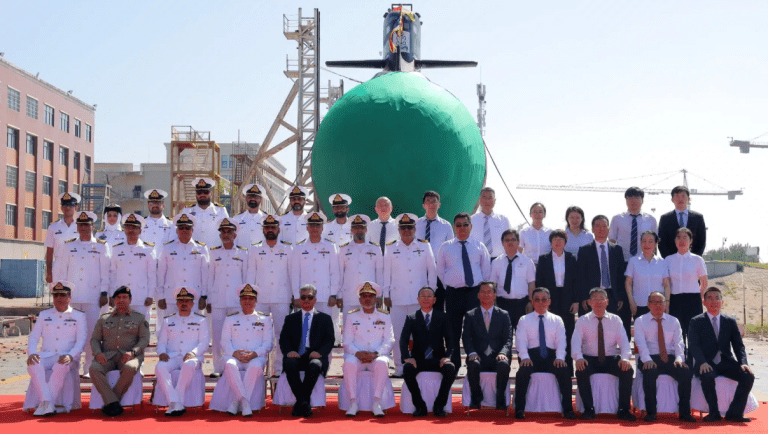
- Future Hangor-class Submarines: Being built with Chinese cooperation, with several units under construction in Pakistan.
- Missiles and Weapon Systems
- Babur Cruise Missile (Naval Variant): Capable of conventional and nuclear delivery, sea-launched to extend Pakistan’s deterrence.
- Harbah Anti-Ship Missile: Indigenous cruise missile deployed on fast attack craft.
- Naval Aviation and UAVs
- The Navy operates maritime patrol aircraft and drones for surveillance over the Arabian Sea, enhancing reconnaissance and anti-submarine warfare. Pakistan also recently showcased the indigenous UAV jammers that will help with the defence of both Pakistan Airforce and Pakistan Navy.
4. Importance of the Pakistan Navy Against India
The Pakistan Navy plays a vital role in maintaining strategic balance with India, particularly in the Arabian Sea and Indian Ocean.
- Sea Denial Capability
- Pakistan’s submarines provide a credible second-strike capability, ensuring deterrence against India’s naval superiority.
- Defense of Sea Lines of Communication (SLOCs)
- Pakistan’s trade and energy imports rely heavily on maritime routes. The Navy ensures the protection of Karachi Port, Gwadar Port, and sea routes in the Arabian Sea.
- Offensive Capabilities
- With cruise missiles like Babur and Harbah, the Navy can strike strategic targets deep inside enemy territory.
- Submarine-based missiles provide Pakistan with a survivable nuclear deterrent against India.
- Regional Balance
- India maintains a numerically larger navy, but Pakistan focuses on asymmetric warfare with stealth submarines, fast attack craft, and missile systems. This strategy ensures cost-effective deterrence.
- CPEC and Maritime Security
- The Navy protects the China–Pakistan Economic Corridor (CPEC) maritime interests, securing Gwadar as a strategic hub against Indian naval threats.
Conclusion
The Pakistan Navy is more than a maritime defense force; it is a central pillar of Pakistan’s strategic balance in South Asia. Its rank structure ensures discipline and leadership, while its technological advancements in ships, submarines, and indigenous weapons provide strength in both defense and offense. Against a larger Indian Navy, Pakistan relies on strategic deterrence, sea denial, and indigenous technologies to protect its maritime frontiers and national security.
About the Author