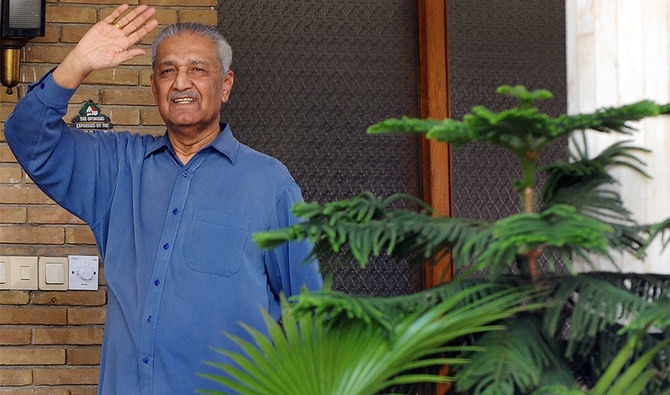
Dr. Abdul Qadeer Khan
When you hear the name Dr. Abdul Qadeer Khan, it’s not just about science—it’s about survival, identity, and power. His story is deeply connected to Pakistan’s journey from a vulnerable young nation to a nuclear-armed state capable of defending itself. But here’s the thing: this journey wasn’t just about one man. It was about leadership, sacrifice, and a collective national will.
Pakistan didn’t pursue nuclear weapons for prestige alone. It did so because it felt surrounded by threats. Wars with India in 1948, 1965, and 1971 had already exposed its vulnerabilities. When India conducted its first nuclear test in 1974, the message was loud and clear: the balance of power had shifted dramatically. Pakistan had two choices—either accept this new reality or change it.
This is where A.Q. Khan stepped in, bringing knowledge, determination, and a sense of urgency. But equally important was the unwavering commitment of Pakistan’s leadership. Together, they pushed forward a program that would eventually make Pakistan the first Muslim-majority country with nuclear weapons, fundamentally altering global and regional politics.
Early Life and Education
Childhood and Migration to Pakistan
Abdul Qadeer Khan was born in 1936 in Bhopal, before the creation of Pakistan. Like millions of others, his life changed after the partition of India. In 1952, he migrated to Pakistan, a country still trying to find its footing. Growing up during this time wasn’t easy. Pakistan lacked resources, infrastructure, and global influence.
These early struggles shaped Khan’s mindset. He didn’t just see Pakistan as a country—he saw it as a cause. Imagine growing up in a place that constantly feels under pressure. That kind of environment builds resilience, but it also creates a strong desire to protect what you have. That desire would later define Khan’s mission.
Studies in Europe and Scientific Growth
Khan’s academic journey took him to Europe, where he studied metallurgy and engineering. He attended top institutions and gained exposure to advanced nuclear technologies. This was a turning point. He wasn’t just learning theory—he was gaining access to knowledge that very few people from developing countries had.
Think of it like learning the secrets of a high-security system from the inside. Khan understood how nuclear technology worked, especially uranium enrichment, which later became the backbone of Pakistan’s nuclear program. This expertise made him incredibly valuable when Pakistan needed it the most.
The Moment That Changed Everything – India’s 1974 Nuclear Test
In 1974, India carried out its first nuclear test. For Pakistan, this was not just a scientific achievement by a neighbor—it was a direct security threat. The power imbalance became obvious overnight.
For many Pakistanis, it raised a serious question: How do we protect ourselves now?
This moment created urgency at the highest levels of leadership. It wasn’t about competition anymore—it was about survival. And for A.Q. Khan, this was the moment he decided to act. He knew Pakistan couldn’t afford to fall behind in such a critical area.
Pakistan’s Leadership and the Nuclear Dream
Vision of Zulfikar Ali Bhutto
Pakistan’s nuclear journey cannot be understood without acknowledging the role of its leadership, especially Zulfikar Ali Bhutto. Long before the 1998 tests, Bhutto had already made up his mind. He famously declared that Pakistan would develop nuclear weapons even if people had to “eat grass.”
That statement wasn’t just dramatic—it reflected a deep commitment. Bhutto believed that nuclear capability was essential for Pakistan’s survival in a hostile region. He saw it as a guarantee of sovereignty and independence.
National Commitment and Sacrifice
Building a nuclear program is not easy. It requires money, expertise, and secrecy. Pakistan faced economic challenges, international pressure, and sanctions. Yet, it continued moving forward.
This wasn’t just a government project—it became a national mission. Scientists worked day and night. Resources were diverted from other sectors. The country made sacrifices because the leadership believed this was the only way to secure its future.
A.Q. Khan Joins the Mission
His Historic Letter to Bhutto
After India’s nuclear test, Khan wrote a letter to Bhutto offering his expertise. He proposed using uranium enrichment instead of other methods. This approach was faster and more practical for Pakistan.
Bhutto recognized the potential immediately. It was like finding the missing piece of a puzzle. Khan had the knowledge, and Pakistan had the will.
Return to Pakistan
Khan returned to Pakistan in the mid-1970s, bringing critical knowledge with him. This wasn’t just a career move—it was a mission. He left behind a comfortable life in Europe to contribute to his country’s defense.
His arrival gave Pakistan’s nuclear program a massive boost. Progress that might have taken decades was now possible in years.
Building the Nuclear Program from Scratch
Kahuta Research Laboratories
Khan established the Kahuta Research Laboratories, which became the heart of Pakistan’s nuclear program. This facility focused on uranium enrichment using centrifuge technology.
Starting from scratch wasn’t easy. Equipment had to be developed, scientists had to be trained, and everything had to be done in secrecy. Yet, step by step, Pakistan moved closer to its goal.
How the Technology Worked
Gas Centrifuge Simplified
Gas centrifuge technology separates uranium isotopes by spinning them at high speeds. It’s like separating heavier and lighter particles in a spinning container.
This method allowed Pakistan to produce weapons-grade uranium, which is essential for nuclear weapons. It was efficient and difficult to detect, making it ideal for a country working under international pressure.
Pakistan Becomes a Nuclear Power in 1998
In May 1998, Pakistan conducted nuclear tests in response to India’s tests. This was the moment everything changed. Pakistan officially became a nuclear power.
For many Pakistanis, it was a moment of pride. It symbolized strength, independence, and security. The country had achieved something that only a few nations in the world possessed.
Why Nuclear Power Matters for Pakistan’s Survival
Security in a Dangerous Region
Let’s be real—South Asia is not the most peaceful region. Tensions between Pakistan and India have existed for decades. In such an environment, nuclear weapons act as a shield.
They don’t just provide military strength—they create caution. No country wants to engage in a full-scale war with a nuclear-armed opponent.
Deterrence and Stability
This is where the concept of deterrence comes in. Nuclear weapons are not meant to be used—they are meant to prevent war. It’s like having a powerful alarm system. Its presence alone discourages threats.
For Pakistan, nuclear capability ensures that no external force can easily threaten its existence. Many believe this is especially important at a time when several Muslim countries have faced conflicts and instability.
Pakistan’s nuclear power sends a strong message: it cannot be easily overpowered or ignored.
A.Q. Khan – Hero or Controversial Figure?
In Pakistan, A.Q. Khan is widely seen as a hero. He gave the country a sense of security and pride. Schools, roads, and institutions have been named after him.
But globally, opinions are mixed. Some view him as a brilliant scientist, while others criticize his alleged involvement in nuclear technology sharing.
This dual image makes his story even more fascinating. He is both celebrated and questioned—a rare combination.
Global Concerns and Allegations
Khan faced allegations of sharing nuclear technology with other countries. These claims led to international criticism and his temporary house arrest.
This part of his story adds complexity. It raises questions about responsibility, ethics, and the global impact of nuclear knowledge.
The Lasting Legacy
Dr. Abdul Qadeer Khan passed away in 2021, but his legacy continues. Pakistan remains a nuclear power, and his contributions are still remembered.
His story is not just about science—it’s about determination, leadership, and the lengths a nation will go to protect itself.
Conclusion
Dr. Abdul Qadeer Khan played a crucial role in transforming Pakistan into a nuclear power, but he didn’t do it alone. It was the vision of leadership, the sacrifices of a nation, and the urgency of survival that made it possible.
Pakistan’s nuclear capability is often seen as its ultimate security guarantee. In a world where conflicts still exist, this power ensures that the country’s sovereignty remains intact. Whether you see Khan as a hero, a strategist, or a controversial figure, one thing is clear—his impact on history is undeniable.
FAQs
1. Why is A.Q. Khan important to Pakistan?
He played a key role in developing Pakistan’s nuclear weapons program, ensuring its defense.
2. Who started Pakistan’s nuclear program?
The vision largely came from Zulfikar Ali Bhutto, with A.Q. Khan leading the technical side.
3. Why did Pakistan build nuclear weapons?
Mainly for security and deterrence, especially after India’s nuclear test.
4. What is nuclear deterrence?
It’s the idea that having nuclear weapons prevents others from attacking.
5. Is A.Q. Khan considered a hero?
In Pakistan, yes. Internationally, opinions are mixed due to controversies.
About the Author