Pakistan Nuclear Doctrine
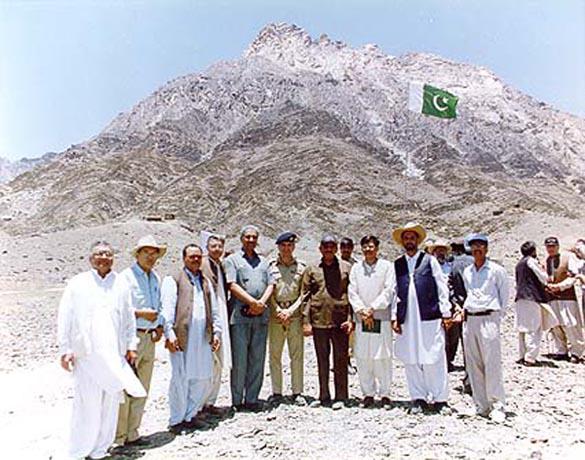
It was 3:15 in the afternoon on May 28, 1998. Deep inside the Ras Koh Hills of Balochistan — a barren, wind-swept mountain range so remote that the nearest town was hours away — a group of scientists and military officers stood at an observation post several kilometres from a hollowed-out granite mountain. They had been working towards this moment for 26 years.
Back in Islamabad, Prime Minister Nawaz Sharif had given the order in just four words: “Dhamaka kar dein.” Conduct the explosion.
Read More: Pakistan signs Defence Pact with Saudi Arabia
At 3:15 PM Pakistan Standard Time, the earth shook.
Five nuclear devices detonated simultaneously underground. Seismographs across Asia spiked. The granite face of Koh Kambaran — the mountain that had been quietly drilled and loaded in complete secrecy — turned white-hot from the heat, then shimmered a ghostly silver-grey visible for miles in every direction.
Pakistan had just become the seventh country in history to publicly test nuclear weapons — and the first Muslim-majority nation on earth to join the nuclear club.
Across Pakistan, millions of people poured into the streets. They wept. They embraced strangers. They shouted “Allah-u-Akbar” from rooftops. Women performed the traditional drum-beating celebrations of victory. The day was later declared a national holiday — Youm-e-Takbeer. The Day of Greatness.
But that moment in the mountains didn’t come from nowhere. It was the final act of a 26-year journey that began in the ashes of Pakistan’s worst-ever military catastrophe, was driven by one of the most extraordinary — and controversial — scientists of the 20th century, and survived military coups, the hanging of a Prime Minister, decades of American sanctions, and the determined efforts of multiple foreign governments to stop it.
This is the complete story.
Part One: Before the Nuclear Test — The Seeds of a Nuclear Pakistan
Pakistan’s Peaceful Nuclear Beginnings
Pakistan’s relationship with nuclear technology began not in a war room but in a classroom.
When US President Dwight Eisenhower launched the “Atoms for Peace” programme in 1953 — offering civilian nuclear technology to friendly nations as a Cold War goodwill gesture — Pakistan was among the first countries to participate enthusiastically.
The government established the Pakistan Atomic Energy Commission (PAEC) in 1956 to develop nuclear energy for power generation. In 1962, the United States gifted Pakistan its first research reactor — the five-megawatt Pakistan Atomic Research Reactor (PARR-1) — which became operational in 1965. PAEC Chairman Ishrat Hussain Usmani, a visionary administrator, used the decade of the 1960s to send hundreds of the brightest young Pakistani scientists abroad to study at the world’s leading universities and nuclear facilities.
Pakistan also established the Pakistan Institute of Nuclear Sciences and Technology (PINSTECH) in 1965.
The official position was entirely civilian: nuclear energy for electricity, research, and development. But there was a parallel, quieter conversation happening in the corridors of government, driven by a simple and frightening reality.
India was watching, and so was Pakistan.
Part Two: The 1965 Vow and the Catastrophe of 1971
“We Will Eat Grass, But We Will Get One of Our Own”
The year 1965 changed everything.
After the Indo-Pakistani War of 1965 ended in an inconclusive stalemate, Pakistan’s Foreign Minister — a brilliant, ambitious young politician named Zulfikar Ali Bhutto — made a declaration that would define the next three decades of Pakistan’s strategic history.
“If India becomes Nuclear Power, we will eat grass or leaves, even go hungry, but we will get one of our own. We have no other choice.”
It was a political statement at the time. Few saw it as a literal programme of action. They would, just six years later.
December 1971: The Wound That Never Healed
No event shaped Pakistan’s nuclear ambitions more definitively than the 1971 war with India — and the national catastrophe that followed.
The conflict began when Pakistan conducted preemptive strikes against Indian airfields in an attempt to neutralise the Indian Air Force. The strikes failed to seriously damage Indian air capability. India then launched a ground campaign in support of the independence movement in East Pakistan — a conflict already well underway between Pakistani military forces and the East Pakistani population.
The war lasted 13 days.
When it ended, the scale of Pakistan’s defeat was almost incomprehensible:
- Pakistan lost half its Navy
- A quarter of its Air Force was destroyed or captured
- One-third of its Army was gone
- Nearly 93,000 Pakistani soldiers were taken prisoner — the largest mass surrender since World War II
- East Pakistan separated permanently, becoming the independent nation of Bangladesh
Pakistan had lost half its territory, half its population, and its strategic dignity — all within two weeks.
When Bhutto addressed the UN Security Council in the immediate aftermath, he compared the Instrument of Surrender Pakistan had been forced to sign to the Treaty of Versailles imposed on a defeated Germany after World War I. He tore papers. He wept. He walked out.
The lesson was visceral and undeniable: conventional military forces were not enough. Without some ultimate guarantee of survival — some weapon so devastating that even a far superior adversary would hesitate — Pakistan could be dismembered again.
The logic of nuclear deterrence had never been more obvious or more urgent.
Part Three: The Multan Conference — The Day the Pakistan decided for Nuclear Power
January 24, 1972: A Secret Meeting in Multan
Just weeks after the ceasefire, Bhutto — now Prime Minister — convened a secret gathering of Pakistan’s top scientific minds in the city of Multan.
The meeting — later called the Multan Conference — took place on January 24, 1972. It is one of the most consequential secret meetings in Asian history.
Bhutto looked around the room at Pakistan’s assembled scientists and issued a single, unambiguous order: “Make Pakistan Nuclear Power.”
Not in theory. Not for research. An actual nuclear weapon.
The programme was codenamed Project-706 (also known as Project-786). Time magazine would later call it Pakistan’s equivalent of the Manhattan Project.
The initial budget was estimated at US$450 million — a staggering sum for a desperately poor country. To finance it, Bhutto launched a diplomatic tour of the Muslim and Arab world. Libya, Saudi Arabia, and other friendly states provided significant financial backing. Bhutto even framed the project to Muslim leaders as the development of an “Islamic Nuclear Power” — a deterrent not just for Pakistan but for the entire Muslim world against nuclear blackmail.
This framing resonated. The money started flowing.
But money alone wasn’t enough. The programme needed scientific genius. It needed someone who understood nuclear enrichment technology — not just theoretically, but practically. Someone who had worked inside the system.
They needed Abdul Qadeer Khan.
Part Four: Dr. Abdul Qadeer Khan — Pakistan’s Most Controversial Hero
The Boy from Bhopal
Dr. Abdul Qadeer Khan was born on April 1, 1936, in Bhopal — a city in pre-Partition British India. He was just 11 years old when his family was swept up in the bloodiest mass migration in human history, crossing the new border into Pakistan in 1952 and settling in Karachi.
The experience of Partition — the communal violence, the displacement, the trauma of losing everything and starting over in a new country — left deep marks on the young Khan. He grew up intensely patriotic, with a fierce sense of what Pakistan meant and what it could lose.
He was also brilliant.
After completing his schooling and earning a degree in metallurgy from Karachi University in 1960, he headed to Europe to pursue graduate studies. He studied at the Technical University of Berlin, earned a Master’s degree in metallurgical engineering from Delft University in the Netherlands in 1967, and completed his PhD from the Catholic University of Leuven in Belgium in 1972.
Then, in May 1972, he took a job that would change the course of history.
Inside URENCO: The Most Sensitive Job in European Nuclear Technology
Khan joined a subcontractor working for URENCO — a joint uranium enrichment enterprise of the United Kingdom, West Germany, and the Netherlands. URENCO’s purpose was to enrich uranium using advanced gas centrifuge technology for Europe’s civilian nuclear power reactors.
His official role was as a metallurgist and senior translator. But the position gave him access to classified sections of the facility, highly sensitive centrifuge designs, and — critically — the identities of the dozens of European companies that supplied URENCO’s components.
He was trusted. He was thorough. And he was quietly memorising everything.
The 1974 Shock — and the Letter That Started It All
On May 18, 1974, India detonated its first nuclear device at Pokhran in the Rajasthan desert. The test was code-named “Smiling Buddha.”
Khan, still working in the Netherlands, felt the news like a physical blow. India — the country that had just taken half of Pakistan three years earlier — was now nuclear-armed.
He didn’t wait to be asked. He sat down and wrote directly to Prime Minister Zulfikar Ali Bhutto.
In his letter, Khan explained his expertise in gas centrifuge-based uranium enrichment — and argued, persuasively, that this approach was faster and more reliable than the plutonium route Pakistan’s PAEC was pursuing. He offered himself and his knowledge entirely to Pakistan’s nuclear programme.
Bhutto met Khan in December 1974 and encouraged him to do everything he could to help Pakistan attain the Nuclear capability.
Over the next year, Khan did something extraordinary. Using his trusted access at URENCO, he systematically procured a blueprint for uranium centrifuges, which transform uranium into weapons-grade fuel for nuclear fissile material — and brought it back to Pakistan in 1976.
He compiled detailed drawings of centrifuge components, photographed technical documents, and memorised the contact information for every European supplier that URENCO used — component manufacturers that had never thought their parts might one day end up inside a Pakistani nuclear weapons facility.
In December 1975, Khan abruptly resigned and flew to Pakistan — taking with him stolen blueprints, technical drawings, and a list of dozens of equipment suppliers.
Dutch authorities discovered what had happened and issued a criminal indictment. A Dutch court eventually convicted him in absentia in 1983, though the conviction was later overturned on a technicality.
Khan’s response to Western criticism was characteristically unapologetic. He wrote in the German magazine Der Spiegel:
“I want to question the bloody holier-than-thou attitudes of the Americans and the British. Are these bastards God-appointed guardians of the world to stockpile hundreds of thousands of nuclear warheads and have they God-given authority to carry out explosions every month?”
Building the Nuclear Plant at Kahuta
Back in Pakistan, Khan was given near-total authority over the uranium enrichment programme. He initially worked under the PAEC, but tensions with its chairman Munir Ahmad Khan erupted quickly.
In July 1976, Bhutto resolved the dispute decisively: AQ Khan was given complete autonomous control of the uranium enrichment project, reporting directly to the Prime Minister’s office — a unique arrangement for a scientific programme that reflected how critically important the government considered his work.
On July 31, 1976, Khan established the Engineering Research Laboratories (ERL) at Kahuta, near Islamabad, with the exclusive task of developing Pakistan’s uranium enrichment plant. The facility would later be renamed the Khan Research Laboratories (KRL) in his honour.
Using the URENCO blueprints, his memorised supplier network, and a procurement operation cleverly designed to disguise nuclear components as ordinary industrial purchases — buying components in small, innocent-seeming batches and assembling them inside Pakistan — Khan built Pakistan’s enrichment infrastructure with astonishing speed.
The Kahuta gas centrifuge plant produced its first highly enriched uranium (HEU) in 1982. In just six years from the day stolen blueprints arrived, Pakistan had weapons-grade uranium.
In March 1983, Pakistan conducted its first successful cold test — a nuclear device test without a full explosion — confirming that the design worked. By the mid-1990s, more than 20 cold tests had been conducted.
Pakistan’s ability to build a working nuclear weapon was essentially complete by the early 1980s. The decision to actually test — publicly, unmistakably — would wait another 15 years.
The Man in His Own Words
As Khan declared after the triumphant 1998 tests, with a directness that left no room for interpretation:
“I never had any doubts I was making Pakisatn Nuclear Power. We had to do it.”
And in a 2011 statement that articulated Pakistan’s entire nuclear rationale:
“Pakistan’s motivation for nuclear weapons arose from a need to prevent ‘nuclear blackmail’ by India. Had Iraq and Libya been nuclear powers, they wouldn’t have been destroyed in the way we have seen recently. If Pakistan had an atomic capability before 1971, we would not have lost half of our country after a disgraceful defeat.”
The logic was brutal, but it was the logic of a man who had lived through Partition and watched his country dismembered. To the Pakistani public, it made complete sense.
The Shadow: The Nuclear Proliferation Network
No account of AQ Khan is complete without acknowledging the darker chapter that followed his domestic triumph.
In the mid-1980s, having satisfied Pakistan’s own needs, Khan began to create front companies in Dubai, Malaysia, and elsewhere. Through these entities he covertly sold or traded centrifuges, components, designs, and expertise in an extensive black-market network. The customers included Iran, North Korea, and Libya.
The network was ultimately exposed in 2003 when a ship named BBC China, carrying centrifuge components bound for Libya, was intercepted. Libya’s Muammar Gaddafi, facing American military pressure after the Iraq invasion, agreed to dismantle his nuclear programme and handed investigators the full trail leading back to Khan.
In 2004, Khan confessed on national television to his actions and took full personal responsibility. The President of Pakistan later pardoned him. He spent five years under house arrest and was released in 2009.
He was seen as a national hero for bringing the country up to par with neighbours India in the atomic field and making its defences “impregnable.” To most Pakistanis, whatever the international verdict, that status never changed.
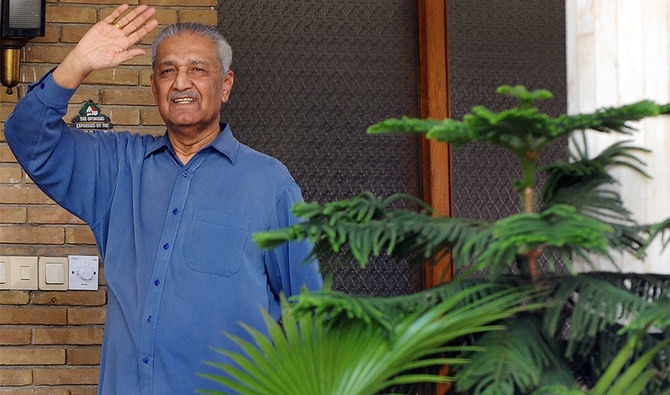
Dr. Abdul Qadeer Khan passed away on October 10, 2021, at the age of 85. He was given a state funeral at Faisal Mosque in Islamabad, attended by government officials, military leadership, and thousands of ordinary citizens who came to pay respects to the man many of them believed had saved their country.
Part Five: The Nuclear Programme Across Every Government
One of the most remarkable facts about Pakistan’s nuclear programme is this: it never stopped. Elected civilian governments, military dictators, US-aligned regimes, and independently minded ones all kept the programme alive — even when it meant withstanding enormous international pressure.
Under Bhutto (1971–1977): The Founder’s Vision
Bhutto launched the programme at Multan in January 1972, gave AQ Khan autonomous authority in 1976, and kept the project funded through a combination of Saudi and Libyan financial support and ruthless internal budget prioritisation. His government was overthrown before the first test — but the foundation was laid.
Under General Zia-ul-Haq (1977–1988): The Coup That Didn’t Stop Pakistan from becoming Nuclear Power
When General Muhammad Zia-ul-Haq overthrew Bhutto in a military coup in July 1977 — and had him executed in April 1979 — most observers expected the nuclear programme to slow down or stop. Many believed the programme was Bhutto’s personal obsession, not an institutional one.
They were wrong.
The military, which now controlled the programme directly, had at least as much reason to want Pakistan to be nuclear power as any civilian government had. The strategic logic was unchanged. If anything, the programme accelerated.
Although Project-706 began under Prime Minister Zulfikar Ali Bhutto, his influence over the project was short-lived. In 1977, General Muhammad Zia ul-Haq took power in a coup d’état and hanged Bhutto in 1979. The military took control of the nuclear programme and it remains under military control today despite Pakistan later returning to a civilian government.
The United States imposed nuclear-related sanctions on Pakistan in 1979. But then, in December of the same year, the Soviet Union invaded Afghanistan.
Overnight, Pakistan became indispensable to American strategy — the country through which weapons, money, and CIA operatives would flow to the Afghan mujahideen. Washington needed Islamabad far more than it wanted to punish it for its nuclear programme.
Under President Ronald Reagan, the United States gave military support to the Afghan mujahideen to fight the Soviet Union. Pakistan — a neighbor of Afghanistan with crucial supply routes — proved to be an essential ally in this effort. As a result, the United States largely turned a blind eye to the Pakistani nuclear program. Reagan himself, after meeting Zia in 1982, called him “a good man” in his diary.
The nuclear programme ran essentially unimpeded through the 1980s. The Kahuta plant produced its first HEU in 1982. Cold tests continued. By the mid-1980s, Pakistan had functional nuclear weapon designs.
Under Benazir Bhutto (1988–1990, 1993–1996): Inheriting Her Father’s Legacy
When Benazir Bhutto became Prime Minister in November 1988 — the first female head of government in the Muslim world — she inherited the programme her father had founded. The strategic logic was entirely unchanged.
Throughout her tenures, Benazir maintained Pakistan’s nuclear posture carefully. In 1995, visiting Washington and lobbying for the release of American F-16s that Pakistan had paid for but not received, she publicly stated that Pakistan did not possess nuclear weapons. The statement was widely understood as diplomatic manoeuvring rather than factual disclosure.
Later, Benazir confirmed in a 2005 interview what many had long suspected — that her father had told her from his prison cell before his execution that a nuclear test had been prepared for August 1977, delayed to December 1977, and then postponed indefinitely to avoid international reaction. Pakistan had been nuclear-capable years before it publicly proved it.
Under Nawaz Sharif (1997–1999): The Man Who Said “Dhamaka Kar Dein”
Nawaz Sharif had already served as Prime Minister once (1990–1993) without testing. His second term would be different — because India forced his hand.
On May 11 and 13, 1998, India’s BJP government under Prime Minister Atal Bihari Vajpayee conducted five nuclear tests at Pokhran — codenamed Operation Shakti. Indian government ministers, riding a wave of Hindu nationalist triumphalism, made statements explicitly referencing Pakistan’s vulnerability. India’s Defence Minister Fernandes announced that Pakistan was India’s “potential threat number one.”
The international community turned immediately to Islamabad. Would Pakistan respond?
President Clinton personally called Sharif and made an extraordinary offer: if Pakistan restrained itself from testing, the US would repeal the hated Pressler Amendment sanctions that had blocked F-16 deliveries and military aid, and provide significant economic assistance.
The pressure not to test was real. The economic cost of testing — fresh sanctions, international isolation, blocked IMF loans — was calculable and serious. The United States, Japan, Germany, and the European Union all urged restraint.
But inside Pakistan, the pressure was even greater.
Prime Minister Mohammad Nawaz Sharif faced enormous pressure to authorize nuclear tests after India conducted its own tests in May 1998. “We in Pakistan will maintain a balance with India in all fields,” said Foreign Minister Gohar Ayub Khan, a proponent of testing. “We are in a headlong arms race on the subcontinent.”
The military, the scientific community, and the public were unanimous. Pakistan’s existential deterrent meant nothing if it was not demonstrated. India had just publicly reminded the world of its nuclear power — and implicitly reminded Pakistan of its vulnerability.
After tense deliberations, Sharif gave the order.
The Pakistan Atomic Energy Commission (PAEC) carried out five underground nuclear tests at the Chagai test site at 1515 hours (PKT) on the afternoon of May 28, 1998. A sixth device was detonated two days later in the Kharan Desert.
28 May is officially declared as Youm-e-Takbeer (lit. Day of Greatness), as well as National Science Day, to commemorate the date of the first five tests and honour the scientific efforts to develop the program.
“If India was not Nuclear Power, Pakistan would not have done so,” Sharif said afterwards. “Once New Delhi did so, we had no choice because of public pressure.”
Part Six: Pakistan’s Nuclear Doctrine — What Does It Actually Say?
Now that we understand how Pakistan got the Nuclear capability, let’s examine the most important question: what exactly does Pakistan plan to do with it?
Pakistan has never published a formal nuclear doctrine document. Unlike the United States with its periodic Nuclear Posture Reviews, or China with its declared No First Use policy, Pakistan’s nuclear doctrine has been communicated in fragments — through official statements, strategic papers, and interviews with senior officials. But from those fragments, an extremely clear picture has emerged.
The Central Promise: Massive Retaliation
Pakistan’s nuclear doctrine is a theoretical concept of military strategy that promotes deterrence by guaranteeing an immediate “massive retaliation” to an aggressive attack against the state. Pakistan’s foreign minister Shamshad Ahmad had warned that if Pakistan is ever invaded or attacked, it will use “any weapon in its arsenal” to defend itself.
There is no ambiguity in this language. Pakistan is telling any potential adversary — primarily India — that a serious attack will not just be met with proportional military response, but with escalation to the most destructive weapons in Pakistan’s arsenal. The entire purpose of this promise is to make the cost of attacking Pakistan so catastrophically high that no rational adversary would attempt it.
This is the doctrine of deterrence by punishment. And it is the foundation on which everything else is built.
The Four Nuclear Thresholds
Pakistani strategic thinkers have publicly outlined four threshold scenarios in which nuclear weapons would come into serious consideration:
1. Spatial Threshold: Indian conventional forces advance deep into Pakistani territory — capturing significant land, threatening Islamabad or other major cities.
2. Military Threshold: India destroys so much of Pakistan’s conventional military capability that conventional defence becomes impossible — the destruction of the Air Force, the armoured corps, or major naval assets.
3. Economic Stranglehold Threshold: India imposes a naval blockade or economic siege so severe that it threatens the country’s economic survival and ability to function.
4. Political Destabilisation Threshold: India takes deliberate action to destabilise Pakistan politically from within — supporting separatist movements, fomenting internal collapse, or working to break the country apart the way it helped break away East Pakistan in 1971.
The four thresholds explain one of the most asked questions about Pakistani nuclear policy: Why does Pakistan refuse a “No First Use” policy?
India maintains a declared No First Use (NFU) policy — promising to use nuclear weapons only in response to a nuclear attack. Pakistan has always explicitly refused this constraint.
As Lt. General Khalid Kidwai — long-serving head of Pakistan’s Strategic Plans Division and the most authoritative public voice on Pakistani nuclear doctrine — stated with complete clarity:
“Pakistan does not have a No First Use policy, and I’ll repeat that for emphasis. Pakistan does not have a No First Use policy. There should never ever be a doubt in anyone’s mind, friend or foe, that Pakistan’s operationally ready nuclear capability enables every Pakistani leader the liberty, the dignity and the courage to look straight into the Indian eye and never blink.”
The reason is strategic and logical: if Pakistan only used nuclear weapons in response to nuclear attacks, India could theoretically wage a devastating conventional war — destroying Pakistan’s military, capturing its territory, strangling its economy — and Pakistan would have no nuclear recourse. The NFU constraint would render Pakistan’s deterrent ineffective against exactly the kinds of threats it faces.
From “Credible Minimum” to Full Spectrum Deterrence
When Pakistan first tested in 1998, it described its goal as “credible minimum deterrence” — enough nuclear weapons to guarantee that any Indian nuclear attack would result in devastating Pakistani retaliation, but without an arms race.
Initially, the goal was modest: fewer than 100 warheads. But this posture was always dynamic, not static — because India’s capabilities and doctrine kept evolving.
The critical shift came in response to India’s development of the Cold Start doctrine.
The Cold Start Problem — and Pakistan’s Answer
Around 2004, India developed a new military concept informally known as Cold Start — a plan for rapid, large-scale conventional military strikes into Pakistani territory that would be swift enough to achieve significant military objectives before Pakistan could make a nuclear decision. The theory was to find and exploit a “space below the nuclear threshold” — punish Pakistan with conventional force, but keep the action calibrated so it wouldn’t trigger Pakistani nuclear retaliation.
From Pakistan’s perspective, this was an attempt to neutralise its nuclear deterrent. If India could wage serious conventional war without triggering nuclear response, Pakistan’s entire strategic insurance policy was undermined.
Pakistan’s answer was direct and unambiguous: the development of tactical nuclear weapons.
The “cold start” doctrine is an alleged plan by India for potentially launching large-scale conventional strikes or incursions into Pakistani territory without triggering Pakistani nuclear retaliation. Kidwai and other former Pakistani officials have explained that Pakistan’s posture — particularly its non-strategic nuclear weapons — is specifically intended as a response to the perceived Indian “cold start” doctrine.
The specific weapon developed was the Nasr (Hatf-IX) — a short-range ballistic missile capable of carrying a low-yield (0.5–5 kiloton) tactical nuclear warhead, with a range of approximately 60 kilometres.
The message to India: “There is no conventional war that Pakistan cannot immediately escalate to nuclear war — at the battlefield level, not just the strategic level. Cold Start now risks nuclear escalation the moment Indian armour crosses our border in force.”
Full Spectrum Deterrence: Complete Coverage at Every Level
According to Kidwai, the “full spectrum” aspect of Pakistan’s deterrence posture encompasses both “horizontal” and “vertical” elements. The horizontal aspect refers to Pakistan’s nascent nuclear “triad” encompassing the Army Strategic Force Command, the Naval Strategic Force Command, and the Air Force Strategic Command. The vertical aspect refers to three tiers of destructive yield — “strategic, operational, and tactical” — as well as a range of coverage “from zero meters to 2750 kilometers,” allowing Pakistan to target the entirety of India.
In plain language, this means:
Tactical weapons (0–60 km range): The Nasr missile system, designed to destroy advancing conventional military formations on the battlefield. Low yield, short range, designed for battlefield use.
Operational weapons (60–2,000 km range): The Ghaznavi, Abdali, and Shaheen-I missiles, targeting major Indian military installations, logistics hubs, and regional economic centres.
Strategic weapons (2,000–2,750 km range): The Shaheen-III and Ghauri ballistic missiles, capable of reaching every major city in the Indian subcontinent — from Lahore to Mumbai to Bangalore to Chennai.
No part of India is outside the range of Pakistan’s nuclear arsenal.
Part Seven: Pakistan’s Nuclear Arsenal Today
Pakistan’s arsenal is estimated at 170 nuclear weapons as of 2025. This makes Pakistan the seventh-largest nuclear power in the world by warhead count.
Pakistan’s warheads span multiple categories:
| Type | Yield | Primary Delivery System |
|---|---|---|
| Tactical | 0.5–5 kt | Nasr (Hatf-IX) missile |
| Operational | 12–25 kt | Shaheen-I, Ghaznavi, Abdali |
| Strategic | 30–150 kt | Shaheen-II, Shaheen-III, Ghauri |
| Second-strike | Variable | Babur-3 submarine-launched cruise missile |
Most warheads use highly enriched uranium (HEU) — the legacy of AQ Khan’s centrifuge programme. Newer designs use plutonium, which allows for smaller, lighter, more efficient warheads.
Fissile material is produced at Kahuta (uranium enrichment by KRL), and at the Khushab Nuclear Complex in Punjab (plutonium production), which operates multiple heavy-water reactors outside IAEA safeguards.
The Nuclear Triad: Pakistan’s Three-Legged Deterrent
Pakistan has been developing the ability to deliver nuclear weapons from three different platforms simultaneously — making a successful disarming first-strike by any adversary essentially impossible:
Land-based missiles: The backbone of the deterrent, managed by the Army Strategic Force Command. Includes the Ghauri (range: ~1,500 km), Shaheen-I (range: ~750 km), Shaheen-II (range: ~1,500 km), Shaheen-III (range: ~2,750 km), and the Ababeel — a MIRV-capable (Multiple Independently targetable Re-entry Vehicle) missile capable of delivering multiple warheads to different targets simultaneously.
Air-delivered weapons: Pakistan’s F-16 Fighting Falcons and Chinese-built JF-17 Thunder jets can carry nuclear-capability and cruise missiles, managed by the Air Force Strategic Command.
Sea-based weapons: The Babur-3 submarine-launched cruise missile, with an estimated range of 450 km, gives Pakistan a sea-based nuclear strike capability. A nuclear-armed submarine is essentially impossible to find and destroy preemptively — making it the ultimate second-strike guarantee.
The Babur-3 submarine-launched cruise missile enhances Pakistan’s second-strike capability, a critical aspect of its deterrence strategy.
Part Eight: A Complete Timeline of Pakistan’s Nuclear Journey
1947 — Pakistan gains independence. Nuclear energy research begins within years under Atoms for Peace.
1956 — Pakistan Atomic Energy Commission (PAEC) established.
1962 — US provides Pakistan its first research reactor under the Atoms for Peace programme.
1965 — Foreign Minister Bhutto declares: “We will eat grass, but we will get one of our own.” Indo-Pakistani War ends inconclusively.
January 24, 1972 — The Multan Conference. PM Bhutto orders Pakistan’s top scientists to build an atomic power. Project-706 officially begins.
May 18, 1974 — India tests “Smiling Buddha” — its first nuclear device. AQ Khan writes to Bhutto from the Netherlands offering his assistance.
December 1974 — Bhutto meets AQ Khan and approves his involvement.
December 1975 — AQ Khan returns to Pakistan with stolen URENCO centrifuge blueprints and supplier contacts. Dutch authorities later indict him in absentia.
July 31, 1976 — Engineering Research Laboratories (ERL) established at Kahuta. Khan given autonomous command over uranium enrichment programme.
July 1977 — General Zia-ul-Haq overthrows Bhutto in a military coup.
April 1979 — Bhutto executed. Nuclear programme continues unchanged under military control.
December 1979 — Soviet invasion of Afghanistan. US turns blind eye to Pakistan’s nuclear programme to maintain the strategic alliance.
1982 — Kahuta plant produces first highly enriched uranium (HEU).
March 1983 — Pakistan’s first successful cold test of a nuclear device. It was successful.
1988 — General Zia dies in a plane crash. Benazir Bhutto elected — first female PM in the Muslim world. Nuclear programme continues.
Mid-1980s onwards — AQ Khan begins selling centrifuge technology to Iran, North Korea, and Libya through a covert black-market network.
1990s — Pakistan conducts more than 20 cold tests. Nuclear capability continuously refined. Nasr tactical missile programme begins.
May 11–13, 1998 — India conducts Pokhran-II nuclear tests under PM Vajpayee. International pressure builds on Pakistan to restrain.
May 28, 1998 — Youm-e-Takbeer. Pakistan detonates five nuclear devices at Chagai. Pakistan becomes the 7th country to publicly test nuclear weapons — and the first Muslim-majority nation.
May 30, 1998 — Sixth nuclear device tested at Kharan Desert, Balochistan.
June 1998 — US and allies impose economic sanctions on Pakistan.
2003 — Ship BBC China intercepted carrying centrifuge components bound for Libya. AQ Khan proliferation network exposed.
January 2004 — AQ Khan confesses on national television. Pardoned by President Musharraf. Placed under house arrest.
2009 — AQ Khan freed from house arrest by Islamabad High Court ruling.
2011 — Khan states publicly: “I never had any doubts I was Pakistan a nuclear power. We had to do it.”
2015 onwards — Pakistan deploys Nasr tactical nuclear missile in response to India’s Cold Start doctrine. Full Spectrum Deterrence doctrine formalised.
October 10, 2021 — Dr. Abdul Qadeer Khan passes away at age 85 due to COVID-19 complications. State funeral at Faisal Mosque, Islamabad. Pakistan observes a national day of mourning.
2025 — Pakistan’s nuclear stockpile estimated at approximately 170 warheads. Nuclear triad — land, air, and sea-based delivery — operational.
Part Nine: Why Pakistan’s Nuclear Deterrent Has Survived Everything
Perhaps the most remarkable dimension of this entire story is the programme’s sheer institutional resilience.
Pakistan’s nuclear programme has survived:
- The execution of the Prime Minister who started it
- Multiple military coups
- Decades of American economic sanctions
- The near-total international isolation of 1998
- The AQ Khan proliferation scandal
- Three different constitutional forms of government
- The death of virtually every key individual who built it
How? Because every Pakistani government — regardless of ideology, alignment, or relationship with the West — has understood the same fundamental strategic reality:
Pakistan cannot guarantee its survival, sovereignty, or territorial integrity through conventional military forces alone against a larger, richer, increasingly powerful neighbour with which it has a fraught history.
Nuclear weapons are the ultimate strategic equaliser. They give a mid-sized developing country the ability to look a far more powerful adversary in the eye and deliver an unambiguous message: “Any war you start with us ends for both of us.”
As AQ Khan summarised it in his most direct public statement:
“Pakistan’s motivation for nuclear weapons arose from a need to prevent ‘nuclear blackmail’ by India. Had Iraq and Libya been nuclear powers, they wouldn’t have been destroyed in the way we have seen recently. If Pakistan had an atomic capability before 1971, we would not have lost half of our country after a disgraceful defeat.”
This argument — forged in the trauma of Partition, hardened in the humiliation of 1971, and vindicated (in Pakistani eyes) by the experiences of every non-nuclear country that was subsequently attacked or dismembered — is the bedrock of Pakistan’s nuclear identity. No government has been able to walk away from it. None has tried.
Frequently Asked Questions
Q: How many nuclear weapons does Pakistan have in 2025? Pakistan’s arsenal is estimated at 170 nuclear weapons as of 2025, making it the seventh-largest nuclear power globally.
Q: When did Pakistan officially become a nuclear power? Pakistan became an officially declared nuclear power on May 28, 1998, when it detonated five nuclear devices at Chagai. A sixth test followed on May 30, 1998.
Q: Who is the father of Pakistan’s nuclear Power capability? Abdul Qadeer Khan is colloquially known as the “father of Pakistan’s atomic weapons program.” He was a metallurgical engineer who brought stolen uranium centrifuge technology from URENCO in Europe and built the enrichment capability that made Pakistan’s nuclear programme possible.
Q: Why did Pakistan want nuclear weapons? The primary motivation was deterrence against India — particularly after the catastrophic defeat of 1971 (which cost Pakistan half its territory) and India’s first nuclear test in 1974. The programme was Pakistan’s answer to the question: “How do we ensure 1971 never happens again?”
Q: Does Pakistan have a No First Use nuclear policy? No. Pakistan explicitly rejects a No First Use policy. Pakistan’s nuclear weapons doctrine, full spectrum deterrence, rejects no first use, promising to use “any weapon in its arsenal” to protect its interests in the event of attack.
Q: What is Pakistan’s Full Spectrum Deterrence doctrine? Full Spectrum Deterrence means Pakistan can respond to any Indian military action — from a battlefield tank incursion (using tactical nukes) to a full strategic assault (using long-range ballistic missiles) — at every level of conflict, with coverage ranging from zero metres to 2,750 kilometres.
Q: What is the Nasr missile? The Nasr (Hatf-IX) is Pakistan’s short-range tactical nuclear missile, designed specifically to counter India’s Cold Start doctrine. It carries a low-yield nuclear warhead (0.5–5 kilotons) to a range of approximately 60 km — meaning it can destroy an advancing armoured column inside Pakistani territory with a nuclear strike.
Q: Who controls Pakistan’s nuclear weapons? Pakistan’s nuclear programme is overseen by the National Command Authority (NCA), chaired by the Prime Minister with the Army Chief as a key member. Day-to-day management is handled by the Strategic Plans Division (SPD) of the military.
Q: What is Youm-e-Takbeer? Youm-e-Takbeer (The Day of Greatness) is Pakistan’s national holiday commemorating the nuclear tests of May 28, 1998. It is also designated as National Science Day to honour the scientific efforts that developed the programme.
Q: Did AQ Khan act alone in the proliferation scandal? Khan went on TV to say he had gone rogue, stating: “There was never ever any kind of authorization for these activities by the government.” The Pakistani government has maintained this position. Western intelligence agencies have long questioned it. The full extent of governmental knowledge remains disputed.
Conclusion: The Bomb That Defined a Nation
Pakistan’s nuclear programme is not a simple story of weapons development.
It is a story of national trauma — a country dismembered in 13 days and determined never to be vulnerable again. It is the story of a visionary but flawed politician who made a promise in opposition and kept it in power, even when it cost him everything. It is the story of one scientist — brilliant, patriotic, controversial, and ultimately tragic — who crossed every legal and ethical boundary the Western world could place in his path, built the most powerful weapon his country had ever possessed, and died celebrated by 220 million people.
It is a story that has run unbroken through dictatorships and democracies, through coups and elections, through sanctions and isolation, through scandal and triumph, for over five decades.
Pakistan’s nuclear ambition did not emerge from arrogance, but from trauma. That is the essential fact the rest of the world has never quite managed to understand — and Pakistanis have never needed to explain to each other.
The mountains of Chagai turned white-hot on May 28, 1998. The earth shook. And Pakistan’s people wept — not from fear, but from the relief of people who had lived in existential anxiety for 27 years and finally felt safe.
Whether that safety is real, durable, and sustainable — in a region where two nuclear-armed neighbours remain in perpetual tension — is the defining strategic question of South Asia in the 21st century.
But the journey that led to those mountains, and the doctrine built on the foundation of that test, is one of the most consequential, compelling, and deeply human stories in the modern history of our world.
This article is intended for educational and informational purposes only. All information is based on publicly available historical records, academic research, and verified news sources.
About the Author